
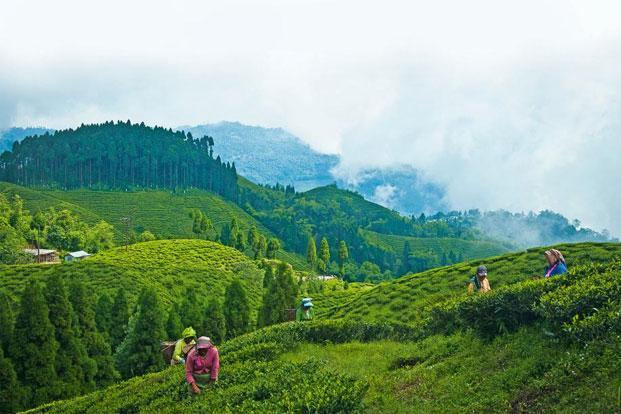
There is a particular quality to Darjeeling that is hard to describe and immediately recognisable once you have experienced it. It is not just the mountain views — extraordinary as those are. It is not just the tea, though the tea is the finest in the world. It is the combination of misty mornings, the sound of a steam whistle echoing off hillsides covered in tea bushes, colonial bungalows draped in bougainvillaea, monasteries tucked into the forest above the cloud line, and the knowledge that on a clear dawn, if you are standing on the right hilltop at the right moment, you will see the third-highest mountain on Earth catch the first light of day.
Darjeeling is known as the Queen of the Hills — and it earns the title. Perched at 2,042 metres in the Eastern Himalayas of West Bengal, it was developed as a British hill station in the 19th century and became the centre of the global tea trade that it still dominates today. The Darjeeling Himalayan Railway — the beloved Toy Train — was built in 1881 to connect the hill station with the plains below and became a UNESCO World Heritage Site in 1999, one of only three mountain railways in the world to receive that designation.
In 2026, Darjeeling is one of the most rewarding destinations in all of North East India — and one of the most complete. You come for Tiger Hill and stay for everything else.
The honest summary: three to four days is the ideal duration. Visit between October and May for clear skies. Tiger Hill at dawn is non-negotiable. The Toy Train steam joy ride should be booked in advance. And give yourself at least one full afternoon in the tea gardens with nothing to do but drink first-flush Darjeeling and look at the mountains.
What Makes Darjeeling Worth Visiting and What Should You Know Before You Go?
Why is Darjeeling so famous and what can you actually see there?
Darjeeling blends old-world charm with breathtaking nature in a way that very few Indian hill stations can match. The Darjeeling Toy Train takes you through misty hills and tea gardens, Tiger Hill offers one of the most spectacular sunrise views in the Himalayas, and the tea gardens produce what many consider the finest tea in the world.
Beyond these headline attractions, Darjeeling has a layered character built from its diverse cultural heritage — a Gorkha majority population with deep Nepali and Tibetan Buddhist traditions, a British colonial legacy visible in its architecture and institutions, and a location at the crossroads of India, Nepal, Bhutan, and Sikkim that gives the town a genuinely cosmopolitan feel for its size.
The town is compact and walkable. The main thoroughfare — Mall Road — curves around Observatory Hill and is lined with tea shops, bakeries, craft stores, and restaurants. The altitude keeps temperatures comfortable even in summer. And the Kanchenjunga massif — the world’s third-highest mountain at 8,586 metres — dominates the western skyline on clear days in a way that stops you mid-sentence every time it appears.
How many days do you need in Darjeeling?
Three to four days are sufficient to cover the main tourist places like Tiger Hill, Batasia Loop, and the local tea gardens. If you plan to visit offbeat spots like Sandakphu or Mirik, a six-day itinerary is recommended.
The ideal three-day Darjeeling itinerary runs: Day 1 — arrive, settle, evening on Mall Road; Day 2 — 4 AM Tiger Hill sunrise, Batasia Loop, Ghoom Monastery, zoo and Himalayan Mountaineering Institute; Day 3 — Toy Train joy ride, tea garden visit, evening at Observatory Hill. A fourth day adds Mirik Lake or a longer tea garden walk.
What Is the Darjeeling Toy Train and How Do You Experience It?
What is the Darjeeling Himalayan Railway and why is it a UNESCO World Heritage Site?
The Darjeeling Himalayan Railway (DHR), fondly known as the Toy Train, is a UNESCO World Heritage Site and a masterpiece of 19th-century engineering. No trip to the Queen of Hills is complete without experiencing this nostalgic journey.
The DHR was built between 1879 and 1881 to solve a practical problem — getting people and goods up from the Himalayan plains to the hill station at Darjeeling. The solution was an engineering marvel: a narrow-gauge (2-foot gauge) railway climbing 2,000 metres over 88 kilometres using a series of loops, reverses, and the famous Batasia Loop spiral to gain altitude without exceeding the locomotive’s gradient limits. The trains share the road with jeeps, pedestrians, and market stalls through the town of Darjeeling itself — one of the most extraordinary urban rail experiences in the world.
The DHR was inscribed as a UNESCO World Heritage Site in 1999, recognised alongside the Nilgiri Mountain Railway in South India and the Rhaetian Railway in Switzerland as an outstanding example of mountain railway engineering. The steam locomotives that still operate on the joy ride section are working examples of engines built in the 1920s — some of the last working steam locomotives in regular passenger service anywhere in Asia.
How do you book the Darjeeling Toy Train and what does it cost in 2026?
The Darjeeling Toy Train offers several route options for tourists in 2026:
Steam Joy Ride (most popular — Darjeeling to Ghum and back): The steam joy ride costs approximately ₹1,500 per adult for the 2-hour round trip from Darjeeling to Ghum and back, including a 10-minute stop at the scenic Batasia Loop and a 30-minute stop at the DHR Railway Museum in Ghum. This is the experience most visitors come for — a working steam locomotive, the smell of coal smoke, and the extraordinary sight of the train inching through busy Darjeeling streets.
Diesel Joy Ride: A diesel-hauled version of the joy ride costs approximately ₹1,000 per adult — the same route and stops without the steam locomotive. Good value if steam rides are sold out.
NJP to Darjeeling (Full Journey): The full 7–8 hour scenic climb from New Jalpaiguri (NJP) on the plains to Darjeeling on the full railway. First Class: ₹1,300–₹1,400. AC Chair Car: ₹1,500. This is the option for slow-travel enthusiasts who want the complete experience of the railway.
Peak season tickets sell out 2–3 weeks in advance. Book online through the IRCTC website or the DHR’s own booking portal. Do not leave this to the day before — steam rides in particular are heavily booked during October–February and the summer school holiday season (April–June).
What is the Batasia Loop and why is it worth seeing?
The Batasia Loop is the most photographed section of the Darjeeling Himalayan Railway — a complete 360-degree spiral loop built in 1919 to reduce the gradient on the descent from Darjeeling. The train circles around a beautifully landscaped garden with a war memorial at its centre, offering panoramic mountain views across the Kanchenjunga range. The sight of the Toy Train completing its full circle with the Himalayas as backdrop is one of the iconic images of North East India.
The Batasia Loop garden is open to visitors independently — entry is approximately ₹30. On the joy ride, there is a scheduled stop here for photographs. If you are not taking the train, a shared taxi from Darjeeling to the loop takes 10–15 minutes and costs ₹30–₹50 per person.
How Do You Experience the Tiger Hill Sunrise and What Should You Expect?
What is Tiger Hill and why do people wake up at 4 AM to visit it?
Tiger Hill is globally celebrated for its uninterrupted views of Mount Kanchenjunga — on clear days, you can even spot Mount Everest from its summit. At 2,590 metres above sea level, Tiger Hill sits 11 km from Darjeeling town and is the highest point in the immediate area — which is why the sunrise view from its summit, looking west across the Himalayan range, is extraordinary.
On clear mornings, the sequence unfolds like this: the horizon over the mountains begins to lighten from deep blue to pale grey. Then, as the sun rises behind you, the snow-covered peaks of Kanchenjunga begin to glow — first a faint pink, then deep amber, then brilliant gold — while the valleys below remain dark and filled with cloud. If the visibility is very clear, the distinctive pyramid of Everest (170 km away) appears on the horizon to the west. The whole spectacle lasts perhaps 20–30 minutes and is one of the most genuinely affecting natural experiences available to a traveller in India.
What is the Tiger Hill entry fee and how do you get there in 2026?
Tiger Hill entry is approximately ₹50 and the best time to arrive is 4:00 AM for sunrise photography. The sunrise time varies by season — in winter (December to February) the sun rises around 6:00–6:30 AM; in summer (April to June) around 4:30–5:00 AM. Arrive at least 30–45 minutes before sunrise to get a good viewing position.
Transport to Tiger Hill: most visitors take a shared taxi from Darjeeling town, departing around 3:30–4:00 AM. A shared taxi to Tiger Hill costs ₹200–₹300 per person. Private taxis cost ₹700–₹1,000 for the round trip and give more flexibility. Your hotel can arrange transport the evening before — do this on arrival, not last minute.
Critical tip: the Tiger Hill sunrise is weather-dependent. Clear views of Kanchenjunga and Everest require clear skies — morning cloud and mist, which are common at Darjeeling’s altitude, can obscure the view entirely. October to December and March to May give the best odds of clear mornings. Even during the best season, there are no guarantees. If your first morning is cloudy, try again the following day.
How Do You Visit Darjeeling’s Tea Gardens and What Should You Know?
What makes Darjeeling tea unique and which tea gardens can you visit?
Darjeeling tea is the only tea in the world with a Geographical Indication (GI) status — like Champagne from the Champagne region of France, genuine Darjeeling tea can only come from the 87 gardens of the Darjeeling district. The combination of altitude (600–2,000 metres), climate, soil, and the specific Camellia sinensis var. sinensis tea plant cultivated here produces a distinctive muscatel flavour — a light, floral, slightly astringent character that cannot be replicated elsewhere.
The most famous Darjeeling teas are the first flush (March–April, the first harvest after winter) and second flush (May–June) — the first flush is particularly prized for its delicate, fresh character and commands the highest prices on the global market.
Tea gardens open to visitors in 2026:
Happy Valley Tea Estate is the most accessible and most visited tea garden for tourists — located just 3 km from Darjeeling town and one of the oldest estates in the district (established 1854). Guided tours of the factory and gardens are available during processing season (March to November). Entry is free; factory tour guides expect a small tip of ₹100–₹200. The estate shop sells first-flush and second-flush teas at fair prices.
Makaibari Tea Estate (Kurseong, 28 km from Darjeeling) is the oldest tea factory in the world still producing tea and one of India’s first organic and biodynamic certified estates. Makaibari is worth the extra effort — the estate offers excellent guided tours, a beautiful garden setting, and the chance to buy exceptionally high-quality certified organic Darjeeling tea directly from the source.
Gopaldhara Tea Estate is one of the highest-altitude tea estates in Darjeeling (approximately 1,500–2,000 metres) and produces some of the most sought-after first-flush teas in the world. The garden setting is extraordinary — terraced tea bushes climbing the hillside with Kanchenjunga as the backdrop. Less touristy than Happy Valley and more photogenic.
What Else Should You Do in Darjeeling?
What are the most rewarding non-tea, non-train experiences in Darjeeling?
Ghoom Monastery (Yiga Choling): One of the oldest Tibetan Buddhist monasteries in the Darjeeling district, Ghoom Monastery is famous for its 15-foot statue of Maitreya Buddha — the Future Buddha — and its collection of rare manuscripts, thangka paintings, and religious artefacts. The monastery sits at 2,438 metres, just below the summit of Ghoom ridge. Entry is free (donations appreciated). A natural stop on the way back from Tiger Hill.
Himalayan Mountaineering Institute (HMI) and Darjeeling Zoo: Established after Tenzing Norgay’s first ascent of Everest in 1953 — Tenzing Norgay was from Darjeeling — the HMI showcases mountaineering history and equipment, including the original gear used on the 1953 Everest expedition. The adjacent Padmaja Naidu Himalayan Zoological Park is India’s highest-altitude zoo and is known for the conservation of Red Panda, Snow Leopard, Himalayan Wolf, and Tibetan Wolf. A combo ticket for HMI and the zoo costs ₹100–₹120.
Observatory Hill and Mahakal Temple: The most important Hindu and Buddhist sacred site in Darjeeling — a forested hilltop above Mall Road draped in prayer flags, home to the Mahakal Temple dedicated to Lord Shiva. The approach through the forest, with monkeys in the canopy and prayer flags strung between the trees, is atmospheric and free. Best visited at dawn or dusk.
Mall Road evening walk: The heart of Darjeeling town — ideal for shopping, cafés, and evening walks. The row of old bakeries, handicraft shops, and tea boutiques along Mall Road has changed remarkably little since the British era. The best time is the early evening before dark, when the locals come out and the town has its most authentic energy.
How Do You Get to Darjeeling and Where Is the Best Place to Stay?
How do you travel to Darjeeling from Kolkata or Delhi?
The nearest airport is Bagdogra Airport (IXB), located about 70 km from Darjeeling. The nearest major railway station is New Jalpaiguri (NJP).
By air: Fly to Bagdogra Airport from Kolkata (45 minutes), Delhi (2.5 hours), or Mumbai (3 hours). From Bagdogra, a shared jeep to Darjeeling costs ₹400–₹600 per person (3 hours). A private taxi costs ₹2,500–₹3,500.
By train: New Jalpaiguri (NJP) is well connected to Kolkata (9–12 hours overnight), Delhi (16–20 hours), and other major cities. From NJP, take the Toy Train full journey to Darjeeling (7–8 hours — the scenic but slow option) or a shared jeep (3–4 hours — the practical option). Most visitors combine both: jeep up, Toy Train for the joy ride experience.
By road from Siliguri: Shared jeeps from Siliguri to Darjeeling cost ₹400–₹600 per person and take 3–4 hours via the hill road. The drive is scenic — the road climbs steeply through tea gardens and forest as the plains disappear below.
What is the best type of accommodation in Darjeeling?
Darjeeling accommodation ranges from budget guesthouses at ₹800–₹2,000 per night to mid-range heritage hotels at ₹3,000–₹8,000 and luxury properties with Kanchenjunga views at ₹8,000–₹20,000+. Prices start at $20 per night for budget accommodations and can go up to $150 for premium establishments.
The most rewarding accommodation in Darjeeling — at any budget level — is a property with a Kanchenjunga view. On a clear morning, waking to see the third-highest mountain on Earth from your bedroom window is one of those travel moments that stays with you for a very long time.
Frequently Asked Questions
What is the best time to visit Darjeeling?
The best time to visit Darjeeling is from March to May and October to December. During these months the weather is pleasant and the skies are usually clear, offering stunning views of Mount Kanchenjunga. October to December is generally considered the finest window — post-monsoon clarity, cool temperatures, and the best odds of a clear Tiger Hill sunrise. The monsoon season (June to September) brings heavy rain, cloud cover, and landslide risk on the hill roads and is best avoided for a first visit.
How much does the Darjeeling Toy Train joy ride cost in 2026?
The Darjeeling Toy Train steam joy ride — the most popular tourist option — costs approximately ₹1,500 per adult for the 2-hour round trip from Darjeeling to Ghum and back. A diesel joy ride on the same route costs approximately ₹1,000 per adult. The full NJP to Darjeeling journey costs ₹1,300–₹1,500 depending on class. Peak season tickets sell out 2–3 weeks in advance — always book through IRCTC or the DHR portal well before your travel date.
Is the Darjeeling Toy Train running in 2026?
Yes, the Darjeeling Himalayan Railway (DHR) operates daily joy rides between Darjeeling and Ghum in 2026. Both steam and diesel options are available. The steam joy ride is particularly popular and sells out quickly during peak season. It is highly recommended to pre-book your tickets online through IRCTC rather than relying on same-day availability at the station.
What is the Tiger Hill entry fee and what time should you arrive?
The Tiger Hill entry fee is approximately ₹50 per person. The best time to arrive at Tiger Hill is around 4:00 AM — at least 30–45 minutes before sunrise — to secure a good viewing position before the sunrise crowds build. A shared taxi from Darjeeling to Tiger Hill costs ₹200–₹300 per person and takes approximately 30–40 minutes. Book your taxi the evening before through your hotel.
How many days should you spend in Darjeeling?
Three to four days is the recommended duration for a first visit to Darjeeling. This covers the essential experiences: Tiger Hill at dawn, the Toy Train steam joy ride, the Batasia Loop, Ghoom Monastery, a tea garden visit, the HMI and zoo, Observatory Hill, and a relaxed evening on Mall Road. A fourth day adds Mirik Lake or a longer tea garden Exploration. Six days is recommended for those wanting to trek to Sandakphu or explore Kurseong and Makaibari Tea Estate.
Experience Darjeeling as Part of Our North East India Tour
Darjeeling is one of the anchors of The Explora Tours’ North East India Tour — a 13-day journey through the most scenically extraordinary region of the subcontinent, combining the Darjeeling Himalayan Railway, Kaziranga National Park’s one-horned rhinoceroses, and a multi-day cruise on the Brahmaputra River.
Your Darjeeling days on our tour include the steam Toy Train joy ride (booked in advance to guarantee availability), an early morning Tiger Hill visit timed for the sunrise, a guided tea garden tour at Happy Valley, and a visit to Ghoom Monastery — all arranged, all timed correctly, all guided by a local specialist who knows Darjeeling the way only someone who grew up near here can.
Prices start from $3,885 per person for 13 days, inclusive of hand-picked accommodation, expert guides, private transfers, and most meals.