
Nothing in 28 years of guiding tourists around India quite prepares you for the moment when the Taj Mahal appears through the great southern gateway. Every traveller who has experienced it says the same thing: no photograph, no description, no amount of prior exposure to images of this building prepares you for the physical reality of standing in front of it.
The Taj Mahal is the rare landmark that exceeds its reputation.
But here is what separates a memorable visit from a frustrating one: timing, preparation, and knowing exactly what to do — and what to skip. The Taj Mahal receives millions of visitors a year, and the difference between arriving at the right time through the right gate with the right information versus arriving uninformed can be the difference between a transcendent experience and a hot, crowded, scam-adjacent disappointment.
This guide covers everything: entry fees, the best time of day, the eternal sunrise vs sunset debate, which gate to use, what the monument rules actually allow, what to skip in Agra, and the insider details that most visitors only learn once they’re already there.
The single most important tip: visit at sunrise, use the East Gate, and book your tickets online in advance. Everything else in this guide is built around that foundation.
What Are the Taj Mahal Entry Fees and Timings in 2026?
Understanding the ticketing system before you arrive saves time, money, and the low-level anxiety of figuring it out at the gate.
How much does it cost to visit the Taj Mahal in 2026?
The Taj Mahal entry fee in 2026 is ₹50 for Indian citizens and ₹1,100 for foreign tourists, with an additional ₹200 to enter the main mausoleum. At the current exchange rate, the basic entry fee for international visitors works out to approximately $13, and the mausoleum add-on is around $2.50.
The full breakdown for international visitors:
- Basic entry (gardens, plinth, exterior of mausoleum): ₹1,100 (~$13)
- Main mausoleum interior (the cenotaphs of Shah Jahan and Mumtaz Mahal): additional ₹200 (~$2.50)
- Children under 15: free, for both domestic and international visitors
Always pay the ₹200 mausoleum entry. The interior — the inlaid stonework, the carved marble screens around the tombs, the extraordinary acoustics of the dome — is what you came for. Not paying for it is one of the most common and most regrettable decisions visitors make at the gate.
What are the Taj Mahal opening times in 2026?

The Taj Mahal opens 30 minutes before sunrise and closes 30 minutes before sunset. Ticket counters open one hour before sunrise and close 45 minutes before sunset. This means opening and closing times shift slightly throughout the year as daylight hours change.
As a general guide for planning purposes: in peak season (October to March), the Taj Mahal opens around 6:00–6:30 AM and closes around 6:00–6:30 PM.
The Taj Mahal remains closed every Friday for tourists. This is a firm and non-negotiable closure — Friday is reserved for prayers at the mosque within the complex. Check what day of the week you plan to visit before finalising your Agra itinerary.
Should you book Taj Mahal tickets online or at the gate?
Book sunrise tickets at least 24–48 hours in advance, especially during peak season. Online booking is available through the Archaeological Survey of India (ASI) portal. The advantages of booking online are: no queue at the ticket counter on arrival, faster entry through security, and guaranteed access during peak season when counters can have significant waiting times.
Avoid touts outside the gates — buy tickets only from official counters or online portal. There are persistent touts near all three gates who offer to “help” with tickets. They are not affiliated with the monument and their assistance is not needed or recommended.
What Is the Best Time of Day to Visit the Taj Mahal?
This is the question every first-time visitor asks, and the honest answer is that sunrise and sunset each offer a genuinely different experience. The right choice depends on what you value most.
Is sunrise or sunset better at the Taj Mahal?
Sunrise is better for most visitors — and here’s the case for it:
The best Taj Mahal visiting time is during sunrise (6:00–8:00 AM). The morning light enhances the marble’s glow, and the crowd is thinner. The Taj Mahal’s white Makrana marble is designed to respond to light — it shifts from pale pink and amber in the first moments of sunrise, to brilliant white in the mid-morning, and back to gold and amber as the day ends. The early morning light is softer, more diffused, and more flattering to photography than the harsh midday sun.
Arriving at or before opening time also means you have 30–45 minutes in the gardens before the day-tripping crowds arrive from Delhi and Jaipur. For a brief window, the Taj Mahal feels almost like yours alone.
Arrive at the Taj Mahal at its earliest opening time — ideally before sunrise — to get the most romantic atmosphere, with light fog gradually unveiling the monument. At dawn, the sky is coloured with hues of yellow and orange.
Sunset is better if you prioritise a quieter pace:
The Taj Mahal sunset view offers a completely different emotional experience. As the sun lowers, the white marble reflects soft golden and amber tones, creating a calm and romantic atmosphere. Sunset hours are ideal for visitors who prefer a slower pace, and many travellers find sunset more peaceful — especially for quiet walks through the gardens and long-view photography from the platform.
The late afternoon sees fewer day-trippers (most have left), which makes the gardens calmer. The light at sunset is also extraordinary — the marble goes through the same colour transformation as at sunrise, in reverse. If you are staying overnight in Agra (which we recommend), combining a sunrise entry with a late afternoon return is the ideal approach.
Is full moon night viewing at the Taj Mahal worth it?
The Taj Mahal allows night visits during full moon nights and two days before and after (except Fridays and the month of Ramadan). Night viewing is available from 8:30 PM to 12:30 AM in shifts.
The full moon Taj Mahal experience is genuinely extraordinary — the white marble glowing silver under moonlight is unlike anything else in India. Tickets are limited and must be booked well in advance. If your travel dates align with a full moon and you can make it work logistically, do not hesitate.
Which Gate Should You Use to Enter the Taj Mahal?
There are three gates — East, West, and South — and the choice of which one to use has a meaningful impact on your experience.
Is the East Gate or West Gate better for the Taj Mahal?
Use the East Gate. This is the consistent recommendation of experienced India guides and returning visitors. Use the East Gate for faster access, and arrive early to enjoy a peaceful morning view.
Here is why: the West Gate is the closest to most of the larger hotels near the Taj Ganj neighbourhood, so it attracts the largest share of early-morning visitors. The East Gate draws fewer visitors and typically has shorter security queues. Both gates lead to the same point inside the complex — the difference is the wait on the outside.
A note on the South Gate: no entry is available from the South Gate at present — it is exit only.
What security checks are there at the Taj Mahal?
Expect airport-style security at all gates: bag scanning, a body frisking, and document checks. Items not allowed inside the monument include backpacks or anything larger than a small bag, food, tobacco products, drones, mobile phone chargers, GoPros, headphones, and tripods.
Leave large bags at your hotel or in the free cloak rooms provided near the gates. A small bag or daypack is fine. Your phone camera is allowed — professional camera equipment (large lenses, tripods) is not.
You will be provided with shoe covers when entering the plinth area around the mausoleum. These are included with your ticket — you do not need to pay for them, despite what anyone outside may tell you.
What Are the Best Views of the Taj Mahal Beyond the Main Complex?
The view from inside the Taj Mahal complex is the obvious one — but some of the finest perspectives on the building are available for free, or nearly free, from outside the walls.
Where can you see the Taj Mahal from a different angle?
Mehtab Bagh (Moonlight Garden): Directly across the Yamuna River from the Taj Mahal, this restored Mughal garden is the best alternative viewpoint in Agra. The symmetrical rear view of the Taj reflected in the Yamuna (when the river is high enough) is one of the most striking compositions you’ll encounter anywhere in India — and the garden is almost always far less crowded than the monument itself. Entry costs ₹300 for foreigners. Do not skip this.
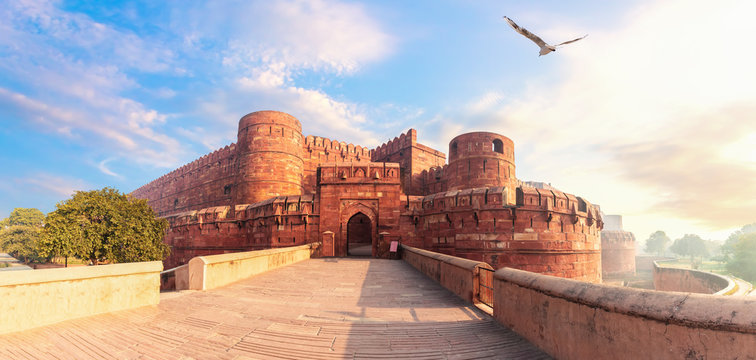
Agra Fort ramparts: The Agra Fort (a 15-minute drive from the Taj) has a terrace from which Shah Jahan is said to have spent the final years of his life gazing across the river at the tomb he built for his wife — imprisoned there by his own son. The view of the Taj Mahal from this distance, framed by the Yamuna, is deeply moving in a way that the close-up view inside the complex is not.
One of the best places to get an alternative view of the Taj Mahal is a boat ride on the Yamuna River — head right from the East Gate all the way down to the bank for a river-level perspective unavailable from anywhere else.
What Should You Skip in Agra — and What’s Worth Your Time?
Agra has a great deal to offer beyond the Taj Mahal, but it also has a well-developed ecosystem of tourist traps. Knowing what to skip is as valuable as knowing what to do.
What tourist traps should you avoid in Agra?
Unofficial guides at the gates: Licensed guides are available inside the complex and can be pre-arranged through your tour operator. Anyone who approaches you outside the gates offering guiding services is unlicensed and should be politely declined. They often lead visitors to marble souvenir shops on commission.
Marble souvenir shops near the monument: The area around the Taj Mahal is dense with shops selling marble inlay work of wildly variable quality. If you want to buy marble products (which can be beautiful), your hotel or tour operator can recommend reputable shops. Never buy from someone who was introduced to you by a guide — the commission structure inflates prices significantly.
“Taj is closed today” scam: This is one of the oldest scams in Agra. A stranger (often near the gate) tells you the Taj is closed for a special reason and offers to take you to see it from another angle — leading you instead to their shop or a less reputable attraction. The Taj Mahal is only closed on Fridays. If someone tells you it is closed on any other day, walk past them.
What else is worth visiting in Agra beyond the Taj Mahal?
Agra Fort is a UNESCO World Heritage Site in its own right — an enormous Mughal fortress containing palaces, audience halls, and the balcony from which Shah Jahan was said to gaze at the Taj in his final imprisoned years. Budget 2–3 hours. Entry is ₹650 for foreign visitors.
Fatehpur Sikri is 40 kilometres from Agra — a complete Mughal city built by Emperor Akbar in the 1570s and abandoned shortly after. The Friday Mosque (Jama Masjid), the Buland Darwaza, and the palace complex are extraordinarily well preserved and almost entirely crowd-free compared to the Taj. Well worth the 45-minute drive.
Itimad-ud-Daulah (the Baby Taj): a smaller, exquisitely detailed marble mausoleum on the opposite bank of the Yamuna. Built 15 years before the Taj Mahal, it is considered its architectural precursor. Visited by a fraction of the Taj’s crowds and genuinely beautiful on its own terms.
FAQ: Taj Mahal Tips and Best Time to Visit
What is the best time of day to visit the Taj Mahal?
The best time to visit the Taj Mahal is at sunrise — arriving at the East Gate at or before opening time (30 minutes before sunrise). The early morning light turns the white marble a soft pink and amber, the crowds are thinnest in the first hour, and the temperature is most comfortable. For visitors who prefer a quieter pace over photography, the late afternoon (2–3 hours before closing) is the next best option, when day-tripping crowds have thinned and the sunset light is equally beautiful.
How much does it cost to visit the Taj Mahal in 2026?
Foreign tourists pay ₹1,100 (approximately $13) for basic entry to the Taj Mahal, plus an additional ₹200 (~$2.50) to enter the main mausoleum interior. Children under 15 enter free. Always pay the mausoleum surcharge — the interior is the most architecturally extraordinary part of the monument. Tickets can be bought online through the ASI portal or at the East or West gate ticket counters on the day.
Which day of the week is the Taj Mahal closed?
The Taj Mahal is closed every Friday to the general public. Friday is reserved for prayers at the mosque within the complex. This is a firm closure with no exceptions. Check your itinerary carefully and plan your Agra visit for any day from Saturday to Thursday. The Taj is also closed on full moon nights except for the dedicated night viewing sessions.
Is sunrise or sunset better at the Taj Mahal?
Sunrise is better for most visitors. The marble glows pink and amber in the first light of dawn, the crowds are at their thinnest, and the temperature is most comfortable — particularly important in the summer months. Sunset is a better option for visitors staying overnight in Agra who can return in the late afternoon after the day-trip crowds have left. If you can manage both — a sunrise entry and a late afternoon return — you will see the full range of what the Taj Mahal’s extraordinary marble can do with light.
Is the Taj Mahal worth visiting in 2026 despite the crowds?
Yes, unequivocally. The Taj Mahal is one of those rare monuments that genuinely exceeds its reputation — the scale, the perfection of the proportions, the quality of the stonework, and the emotional weight of what it represents are more affecting in person than any photograph or description can convey. Crowds are a reality, but they are manageable with the right timing (sunrise, East Gate, weekday). Most visitors who arrive organised and open-minded describe their Taj Mahal visit as one of the defining experiences of their travelling life.
Visit the Taj Mahal the Right Way — with Expert Guidance
The Taj Mahal is the centrepiece of India’s most popular travel circuit, and visiting it with an expert guide transforms the experience from impressive to genuinely illuminating. Understanding the symbolism of the inlaid stonework, the geometry of the gardens, the astronomical alignments built into the structure, and the human story behind its construction takes the experience to a completely different level.
The Explora Tours’ Golden Triangle Discovery includes a guided morning visit to the Taj Mahal — timed for sunrise, accessed through the East Gate, with a specialist guide who has made this visit dozens of times and knows exactly how to make it extraordinary. The tour also covers Agra Fort, Delhi, and Jaipur across 8 expertly planned days from $2,800 per person.
Every detail — tickets, timing, transport, guides — is handled before you arrive. All you need to do is look up.