
There is no city in India quite like Varanasi — and arguably no city in the world quite like it either.
It is one of the oldest continuously inhabited cities on Earth, a place that has been a centre of Hindu pilgrimage, learning, and spiritual practice for over 3,000 years. The Ganges flows broad and ancient past its stone ghats, where cremations burn day and night alongside morning bathers, silk weavers’ workshops, chai vendors, and temple priests performing rituals that have continued unbroken across millennia. Life and death exist here side by side, in the open, without apology.
First-time visitors to Varanasi are often overwhelmed — not unpleasantly, but genuinely. The city does not ease you in. It simply is what it is, and it trusts you to find your footing.
Most people who visit Varanasi call it the most powerful place they have ever been. Many say they understood India better after one day here than after a week anywhere else. A significant number go back.
This guide tells you what to actually do in Varanasi — the experiences worth organising your visit around, the ghats worth seeking out, what the Ganga Aarti and the dawn boat ride are really like, and how long to spend here. No vague spiritual language. Just practical, honest guidance for getting the most out of one of the world’s most extraordinary places.
The honest summary: give Varanasi two nights minimum. Wake before dawn on your first morning for the boat ride. Watch the Ganga Aarti on your first evening. Walk the ghats during the day. Everything else flows from those three anchors.
What Makes Varanasi Different From Every Other City in India?
Understanding what Varanasi is before you arrive matters — because nothing about it operates the way other Indian cities do.
Why is Varanasi considered the holiest city in India?
Varanasi — also known as Kashi (the City of Light) and Benaras — is considered the most sacred city in Hinduism for several layered reasons. It is believed to be the earthly home of Lord Shiva, the presiding deity of destruction and transformation. The city sits on the banks of the Ganges, the most sacred river in Hinduism, which is believed to purify the soul of anyone who bathes in it. Most significantly, Hindus believe that dying in Varanasi and being cremated on the banks of the Ganga leads to moksha — liberation from the cycle of death and rebirth — making it the holiest place in India to die.
This belief is not abstract. It is the reason why thousands of elderly and dying Hindus travel to Varanasi to spend their final days. It explains the burning ghats, the hospices, the constant stream of funeral processions through the old city’s narrow lanes. It is what gives the city its quality of living entirely in the present tense — birth, death, prayer, commerce, and ordinary daily life all happening simultaneously in the same narrow gali.
How old is Varanasi?
Varanasi is among the oldest continuously inhabited cities in the world. It has been a living city for over 3,000 years — predating Rome, Athens, and Jerusalem as an active urban centre. Mark Twain, visiting in the 19th century, wrote that Varanasi is older than history, older than tradition, and even older than legend. That feeling — of standing somewhere genuinely ancient — is one of the first things visitors notice and one of the hardest things to articulate when they return home.
What Are the Most Important Ghats in Varanasi and What Happens at Each One?
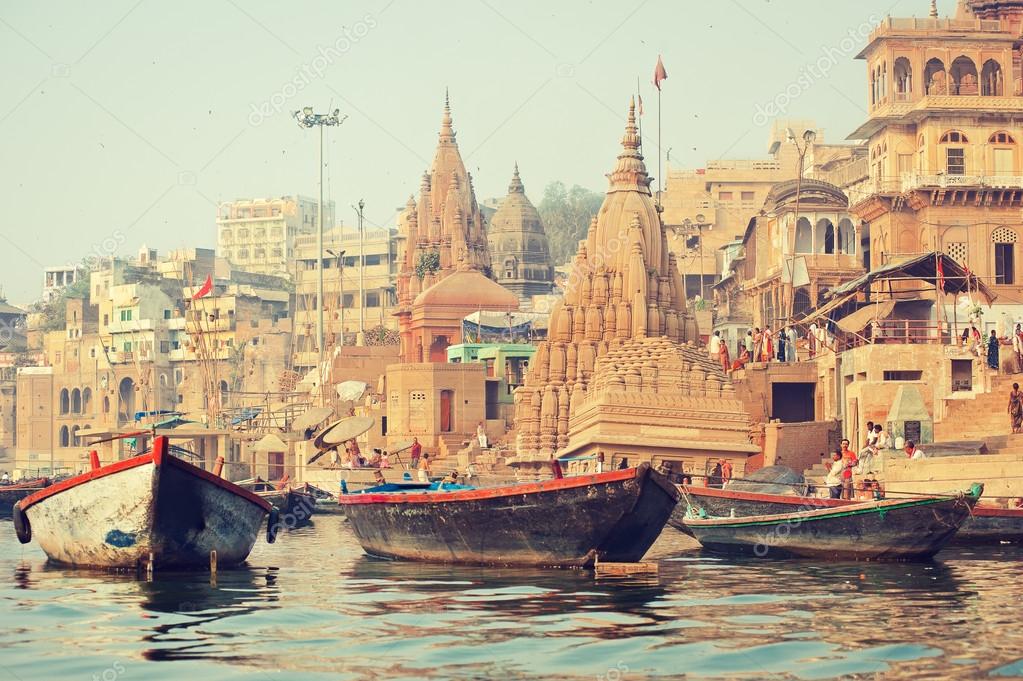
The ghats are the stone steps leading down to the Ganges along a 7-kilometre stretch of riverbank. There are 88 ghats in total. Each has a different character, history, and set of rituals. You do not need to visit all of them — but knowing which ones matter and why will focus your experience.
Which Varanasi ghats should you definitely visit?
Dashashwamedh Ghat is the most famous and most central ghat in Varanasi — the main stage of the evening Ganga Aarti ceremony and the busiest point on the entire riverfront. According to legend, Lord Brahma performed the Dashashwamedh sacrifice here. It is the ghat to orientate yourself from and the one you will inevitably return to. Come for the Aarti in the evening and again in the early morning to see the same space transformed into a place of quiet bathing and prayer.
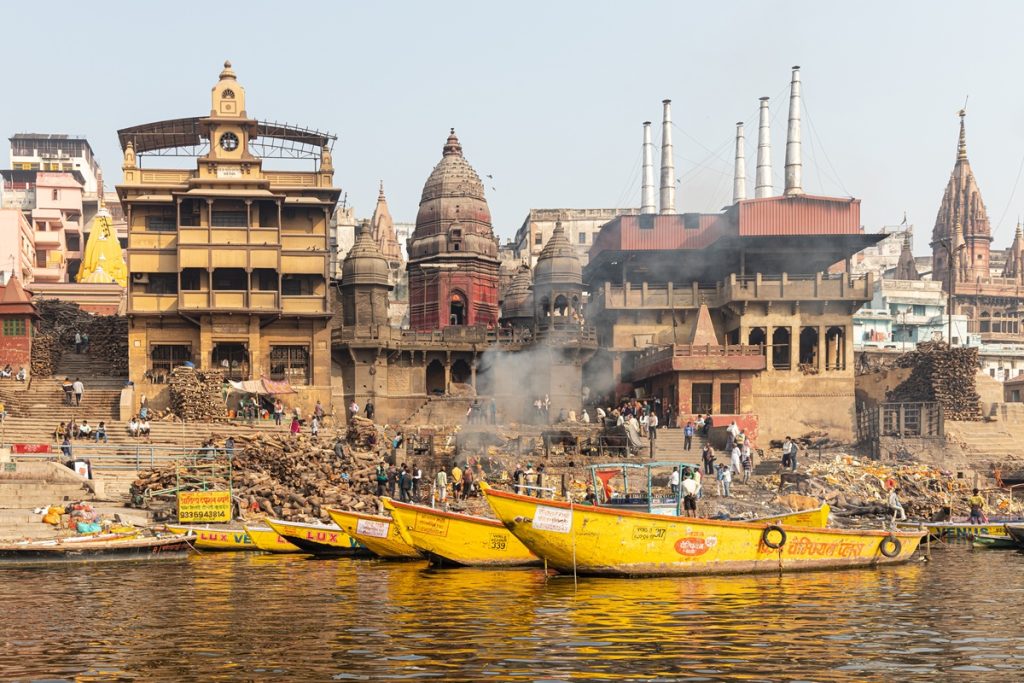
Manikarnika Ghat is the primary cremation ghat of Varanasi. The funeral pyres burn 24 hours a day, every day, all year. Bodies wrapped in cloth are carried down through narrow lanes and placed on the pyres. It is believed that being cremated at Manikarnika guarantees moksha, which is why it has operated continuously for centuries and why families travel great distances to bring their dead here. Visitors can observe from a respectful distance — photography is strictly prohibited, and this must be respected absolutely. What you witness is not a spectacle. It is one of the most profound and humanising experiences available to a traveller anywhere in the world.
Assi Ghat is where the River Assi meets the Ganga and marks the southern boundary of the main ghat stretch. It is popular with travellers, students, and spiritual seekers — the area around it has many good guesthouses, cafés, and yoga centres. Morning yoga sessions on the ghat are a daily ritual, and the evening Aarti here is smaller and more intimate than the ceremony at Dashashwamedh. Many experienced Varanasi visitors prefer Assi for its calmer energy.
Harishchandra Ghat is the oldest cremation ghat, named after the legendary King Harishchandra who worked here as a servant to pay his debts. It is quieter than Manikarnika and receives fewer visitors, making it a more contemplative experience. Same rules apply: observe with respect, no photography.
Tulsi Ghat is named after the poet-saint Tulsidas, who wrote the Ramcharitmanas — the vernacular Hindi retelling of the Ramayana — here in Varanasi. It hosts the famous Ram Leela performances during the Navratri festival, one of the most spectacular theatrical traditions in India.
How do you get between the ghats?
The most beautiful and logistically practical way to see the ghats is by boat on the Ganges — either a dawn boat ride (essential, discussed below) or an afternoon row along the full stretch. Walking the ghats end to end along the riverbank is also possible and takes 2–3 hours at a comfortable pace. The lanes behind the ghats — called galis — are too narrow for vehicles; the old city is navigated entirely on foot.
Auto-rickshaws cost approximately ₹20–40 per km in the wider city, but the old city gali network is inaccessible to motorised transport. Comfortable walking shoes are essential.
What Is the Ganga Aarti and How Do You Experience It Properly?
The Ganga Aarti takes place every evening at Dashashwamedh Ghat, where priests perform synchronised rituals with fire, incense, and chanting in an unforgettable ceremony. It is the single most popular experience in Varanasi for visitors, and for good reason — it is genuinely extraordinary.
What actually happens during the Ganga Aarti?
The Ganga Aarti is a nightly fire ritual (puja) performed by a team of priests in honour of the Ganges River. The ceremony begins at sunset — approximately 6:00–7:00 PM depending on the season — and runs for 45–60 minutes. The priests perform a choreographed sequence of movements involving large multi-tiered brass oil lamps, incense, flowers, conch shells, and Sanskrit chanting. The ceremony is synchronised, theatrical, and genuinely moving even for visitors with no prior connection to Hinduism.
Thousands of people gather each evening — on the ghat steps, in boats on the river, on the rooftop restaurants and guesthouses overlooking the water. The boat perspective is the one most experienced India guides recommend for first-time visitors: being on the river looking toward the ghat gives you both the ceremony itself and the extraordinary scene of thousands of devotees gathered on the steps behind it.
How do you get a boat seat for the Ganga Aarti?
Reserve Ganga Aarti boat seats early on the morning of your visit day — don’t leave this until the afternoon. Your hotel can almost always arrange this. Alternatively, go directly to the ghat in the morning and negotiate with the boat operators yourself. Prices vary — expect to pay Rs 200–500 per person for a shared boat, or more for a private boat with a better position.
The free alternative is to sit on the ghat steps with the crowd, which gives you a closer but more congested experience. Both work. The boat gives you the wider perspective and the better photographs.
What Is the Dawn Boat Ride on the Ganges Really Like?
If there is one experience that defines Varanasi, the dawn boat ride on the Ganga is it — the light builds slowly from darkness into blue, then grey, then a soft golden glow. In winter, mist hangs over the water and the ghats appear gradually. The sounds come first: a conch shell, temple bells, distant chanting. Then the city wakes.
How do you arrange the dawn boat ride and what time should you leave?
Wake up early — around 5 AM. The boat ride should begin before first light so you are already on the water when the sun rises. Your hotel can arrange a boat and operator the evening before — do this as soon as you check in. The ride lasts 1–2 hours and covers the full stretch of the main ghats, from Assi Ghat in the south to Manikarnika and beyond in the north.
What you will see: ritual bathing and prayer at dozens of ghats simultaneously, priests performing morning pujas, laundry being washed and spread across the steps to dry, boatmen calling to one another across the water, the silhouette of temples and haveli rooftops against the lightening sky, and the cremation fires at Manikarnika burning exactly as they have for three thousand years.
It is not a performance arranged for tourists. It is a city beginning its day, as it always has, and you are on the water watching it. Most visitors describe it as one of the most affecting experiences of their lives.
How Long Should You Spend in Varanasi and What Should You Do Each Day?
Two nights gives you one evening for the Ganga Aarti, one dawn for the boat ride, and enough time to walk the ghats, explore the gali behind them, and try the food. Three nights is better — it allows a half-day trip to Sarnath.
What is the ideal Varanasi day-by-day itinerary?
Day 1 — Arrive, walk, Aarti: Arrive and check in as early as possible. Spend the afternoon walking the ghats from Assi northward — the afternoon light on the river is soft and the pace of the ghats is relatively calm. Arrange your boat for the following morning. In the evening, position yourself for the Ganga Aarti at Dashashwamedh Ghat — either from a boat on the river or from the ghat steps. After the Aarti, dinner in the lanes behind the ghat. The street food in the old city — kachori sabzi, thandai, chaat, lassi — is some of the best in Uttar Pradesh.
Day 2 — Dawn boat ride, old city, Kashi Vishwanath: Wake at 5 AM for the dawn boat ride. Return for breakfast. Spend the mid-morning walking the old city galis behind the ghats — the silk weaving workshops, the temples, the chai stalls — with a guide who knows the lanes. Visit the Kashi Vishwanath Temple (the Golden Temple), one of the 12 Jyotirlinga shrines and the most sacred Shiva temple in India. Non-Hindus may not be permitted inside the inner sanctum but can enter the complex and view the temple from the entrance. Afternoon at your own pace — a rooftop café overlooking the river for the afternoon is time well spent.
Day 3 (if you have it) — Sarnath: Sarnath is 10 kilometres from Varanasi and one of the most important Buddhist pilgrimage sites in the world — the Deer Park where the Buddha gave his first sermon after his enlightenment. The Dhamek Stupa (5th century CE), the archaeological museum containing the original Lion Capital of Ashoka (which became India’s national emblem), and the ruined monastery complex make this a half-day well spent. A return auto-rickshaw costs Rs 400–600.
What food should you try in Varanasi?
Varanasi has a distinct food culture tied to its religious character — the city is overwhelmingly vegetarian. The specific things not to miss: kachori sabzi (deep-fried flaky pastry with spiced potato curry) at the lane stalls near Kachori Gali for breakfast; thandai (a cold spiced milk drink with rose, saffron, and cardamom) from the shops near Dashashwamedh Ghat; malaiyo (a winter-only milk foam dessert, delicate and unlike anything else in India); and the famous Varanasi lassi — thick, sweet, served in clay cups that you smash after drinking.
Frequently Asked Questions: Varanasi Travel Guide
What is Varanasi famous for? Varanasi is famous for being the holiest city in Hinduism and one of the oldest continuously inhabited cities in the world. It is known for its 88 ghats along the Ganges River, the Ganga Aarti fire ceremony performed nightly at Dashashwamedh Ghat, the burning cremation ghats at Manikarnika where Hindus are cremated to achieve moksha (liberation from rebirth), the Kashi Vishwanath Golden Temple, and a centuries-old tradition of silk weaving. It is also the city where the Buddha is said to have first passed through on his way to Sarnath, 10 kilometres away.
Is Varanasi safe for tourists? Yes — Varanasi is safe for tourists including solo female travellers.
How many days do you need in Varanasi? Two nights in Varanasi is the minimum to have a meaningful experience — enough time for the dawn boat ride, the Ganga Aarti, and a walk through the old city ghats and galis. Three nights is better and allows a half-day trip to Sarnath (the site of the Buddha’s first sermon) and more time to simply sit with the city at its own pace. Four nights is recommended for travellers doing a spiritual-focused India itinerary who want to explore the ashrams, silk-weaving culture, and less-visited northern ghats.
What is the best time of year to visit Varanasi? The best time to visit Varanasi is October to March, when temperatures are cool (8°C to 22°C) and the skies are clear. The winter months (December and January) bring mist over the river at dawn — the boat ride in winter mist is one of the most atmospherically beautiful experiences in India. The monsoon (July to September) floods some of the lower ghats, which can disrupt the Ganga Aarti and boat rides. Dev Deepawali (the Festival of Lights, held on the full moon of November) is the most spectacular time to be in Varanasi — the entire ghat stretch is lined with hundreds of thousands of oil lamps.
Can non-Hindus attend the Ganga Aarti and visit the ghats? Yes — the Ganga Aarti at Dashashwamedh Ghat is open to everyone regardless of religion, nationality, or background. The ghats themselves are public spaces and can be walked by anyone. Non-Hindus are welcome to observe ceremonies and rituals respectfully, though they may not be permitted inside the inner sanctum of the Kashi Vishwanath Temple. The only firm rule for everyone is no photography at the cremation ghats — this must be respected absolutely.
Experience Varanasi as Part of a Spiritual India Journey
Varanasi is the heart of The Explora Tours’ Spiritual India itinerary — a 10-day journey through India’s most sacred places that also includes Rishikesh, the yoga capital of the world, and other significant spiritual sites along the way.
Every visit to Varanasi on our tours is accompanied by an expert local guide who was born and raised in the city — someone who can explain the theology behind the rituals, navigate the galis with confidence, and give you the context that transforms a powerful visual experience into a genuinely understood one.
The dawn boat ride, the Ganga Aarti from the river, the morning walk through the old city lanes — all arranged, all timed right, all guided by someone who knows this city the way only a local can.