
There is a moment on the Kerala backwaters — usually in the first hour on board, when the canal narrows and the coconut palms close in overhead and a woman washing clothes on the bank waves at your boat without looking up — when you understand why people come here specifically.
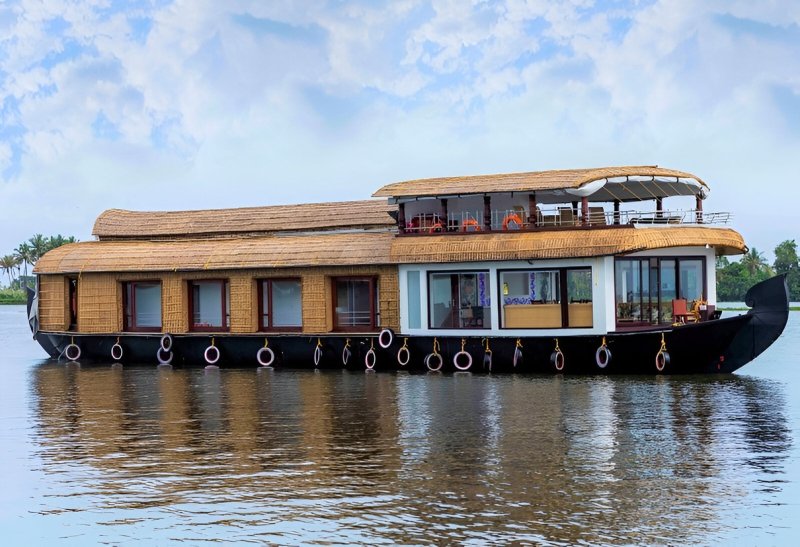
The Kerala backwaters are a 900-kilometre network of interconnected canals, rivers, lagoons, and lakes running parallel to the Arabian Sea coast in the south Indian state of Kerala. The network is one of the most distinctive landscapes in Asia — dense green waterways threading between rice paddies, fishing villages, temple compounds, and Chinese fishing nets that have been used here for five centuries. The houseboats that cruise these waterways are converted rice barges (kettuvallam) — traditional wooden vessels now fitted with bedrooms, living areas, kitchens, and sun decks, staffed by a crew of two or three who cook your meals on board and navigate the canals while you sit on the deck and watch the world move slowly past.
A houseboat cruise on the Kerala backwaters is one of those travel experiences — like the Ganga Aarti in Varanasi or the dawn view of the Taj Mahal — that tends to exceed expectations in the most straightforward way. You get on the boat. The canal opens up. The crew brings coconut water. The light is extraordinary. And hours pass without you quite noticing.
This guide tells you exactly what a Kerala backwaters houseboat cruise involves, what it costs in 2026, how to choose between Alleppey and Kumarakom, which routes are worth taking, and everything you need to know to book the right experience.
The bottom line: book a private overnight houseboat from Alleppey, go between November and February for the best weather, and budget ₹10,000–₹20,000 per night for a good quality experience. Everything else in this guide is built around that foundation.
What Are the Kerala Backwaters and Why Are They Worth Visiting?
What exactly are the Kerala backwaters?
The Kerala backwaters are a 900-kilometre network of canals, rivers, lakes, and lagoons that runs along the coast of Kerala in South India, broadly parallel to the Arabian Sea. The network connects a series of lakes — Vembanad Lake being the largest — with the sea and with each other through hundreds of narrow canals lined with vegetation, villages, paddy fields, and coconut plantations.
The backwaters were historically the primary transport and trading network of coastal Kerala — rice, coconut, and spices moved through these canals by boat for centuries before roads existed. The traditional wooden rice barges (kettuvallam) that carried cargo have been converted, since the 1990s, into the houseboats that now carry tourists through the same waterways.
Why do people travel specifically to the Kerala backwaters?
The Kerala backwaters offer something genuinely uncommon in Indian travel — slowness. India is an intense country in almost every dimension: noise, colour, density, energy. The backwaters are quiet. The pace is governed by the canal rather than the timetable. The landscape is soft and green rather than hot and golden. The food is exceptional. The crew is unhurried. It is one of the very few places in India where the default mode is rest rather than activity.
For couples, honeymooners, and anyone who wants a recovery day or two after the intensity of a Rajasthan or Golden Triangle itinerary, the backwaters provide the perfect counterpoint. For families, the novelty of sleeping on a boat on a canal in a coconut forest is a guaranteed memory. For solo travellers and photographers, the light — particularly at dawn and in the late afternoon — is extraordinary.
What Is It Like to Stay on a Kerala Houseboat?
What happens on a typical Kerala houseboat overnight stay?
The standard overnight houseboat experience follows a comfortable rhythm: check-in at the boat jetty around noon, a welcome drink and crew introduction, casting off and beginning the cruise through the wider canals of Vembanad Lake, narrowing into smaller canals as the afternoon progresses, anchoring at a quiet spot as darkness falls (boats don’t cruise at night — regulations require anchoring from 6:00 PM to 6:00 AM), dinner served on board by the crew, sleeping on the boat, and a dawn cruise back to the jetty by mid-morning.
The onboard crew typically consists of a captain/navigator, a cook, and a helper. Three meals and snacks are included in most houseboat packages — breakfast, lunch, and dinner are all prepared in the boat’s kitchen from fresh ingredients, with the cuisine being traditional Kerala cooking: fish curry, prawn masala, rice, coconut-based vegetable dishes, appam and stew. The food on a good houseboat is genuinely excellent.
The houseboats range from basic to extremely luxurious. The entry-level boats have simple but clean bedrooms with AC, a small living area, and a sun deck. Mid-range boats add a larger sun deck, better furnishings, and sometimes a Jacuzzi or indoor dining area. Luxury boats are genuinely hotel-standard — polished wood interiors, premium bedding, extensive deck space, and full catering service.
What should you expect on the sun deck?
The sun deck is where you will spend most of your time. It typically has rattan chairs, a small table, and shade canopy for the hotter hours. From the deck, you watch the canal life unfold around you: fishermen casting nets, women washing clothes on the banks, children waving from the waterside, egrets standing in the shallows, the occasional other houseboat gliding past, and the extraordinary quality of Kerala light — softer, more diffused than northern India — playing across the water and the palms.
The deck is at its best in the first hour after dawn and in the two hours before sunset. These are the times when the light turns golden, the air is coolest, and the canal is quietest.
What Does a Kerala Houseboat Cost in 2026?
How much does an Alleppey houseboat cost for one night in 2026?
Houseboat costs in Kerala in 2026 vary significantly by quality, season, and duration. Here is an accurate price breakdown for private one-bedroom houseboats in Alleppey:
Budget / Standard: ₹8,500–₹12,000 per night (2 persons). Basic AC bedroom, simple facilities, crew of two. Food included. This tier is functional and the backwaters experience is the same — the differences are in furnishings and deck space rather than the canal itself.
Deluxe / Mid-range: ₹12,000–₹25,000 per night (2 persons). Better furnishings, larger sun deck, higher quality food preparation, more attentive crew. This is the sweet spot for most international visitors.
Premium / Luxury: ₹25,000–₹60,000+ per night (2 persons). Full luxury fittings, premium bedding, Jacuzzi, additional crew, fine dining on board. Luxury 2-bedroom houseboats in Alleppey start from ₹46,000 per night in off-peak season (April to September) and ₹60,000 per night in peak season (October to December and January to March).
Day cruise only (no overnight): Day cruise rates start from ₹9,000 for 2 persons, with premium day cruises from ₹15,000 and luxury day cruises from ₹20,000.
A 5% GST applies to all houseboat bookings on top of the quoted price.
Is Alleppey or Kumarakom cheaper for houseboats?
Alleppey is better for most travellers due to variety, pricing, and authentic experience. Kumarakom houseboats are generally more expensive — many boats in Kumarakom are well-maintained and the routes are often more exotic, which pushes prices higher. For first-time backwaters visitors, Alleppey is the right choice. Kumarakom is better suited to repeat visitors seeking a quieter, more exclusive experience.
Should You Choose Alleppey or Kumarakom for the Kerala Backwaters?
This is the most common question from first-time backwaters visitors, and the answer depends clearly on what you’re looking for.
What is Alleppey (Alappuzha) like for a houseboat trip?
Alleppey — officially called Alappuzha — is the main hub of Kerala’s backwaters tourism and the starting point for the majority of houseboat cruises. It sits on the northern shore of Vembanad Lake and gives access to the widest variety of canal routes, from the broad open waters of the lake to narrow village canals where the palms arch overhead.
Alleppey has the most houseboats (hundreds of options across all price ranges), the best infrastructure for booking and boarding, and the most diverse routes. The downside is that on the busiest stretches — particularly the Punnamada Lake area near the boat jetty — you’ll share the water with dozens of other houseboats during peak season. For a genuinely quiet experience, your captain will navigate you into the smaller canals away from the main tourist traffic.
Best for: First-time visitors, couples, families, anyone who wants variety and value.
What is Kumarakom like for a houseboat trip?
Kumarakom sits on the eastern shore of Vembanad Lake, 13 kilometres from the town of Kottayam. It is quieter, less commercialised, and more exclusive than Alleppey — with fewer houseboats, more upmarket properties, and a general sense of having more of the backwaters to yourself.
If you desire a serene, nature-focused retreat with exclusive experiences, Kumarakom is ideal. The Kumarakom Bird Sanctuary is a significant bonus — a 14-acre sanctuary on the lake shore that is one of the best birdwatching spots in Kerala, home to migratory birds including herons, egrets, kingfishers, and the rare Siberian stork during winter months.
Best for: Couples on honeymoon, luxury travellers, repeat visitors who want a quieter experience.
What Are the Best Kerala Backwaters Routes?
Which backwaters route should you take on a houseboat?
Alleppey to Alleppey (loop route): The standard overnight route for most tourists — the houseboat leaves the Alleppey jetty, cruises south and west through Vembanad Lake and its adjoining canals, anchors overnight, and returns to the jetty the following morning. Total cruise time: approximately 8–10 hours across the two days. This covers the essential backwaters experience and is right for most visitors.
Alleppey to Kollam (one-way, two nights): The route between Alleppey and Kollam is ideal for a longer one-way trip extending across two nights. It is very scenic with many narrow canals, farm fields, and secluded villages, passing the Amritapuri Ashram of Amma, the “Hugging Mother”, and Alumkadavu, where the traditional houseboats are actually built. This route is significantly less trafficked than the standard Alleppey loop and gives a much more genuine sense of the backwaters as a living landscape rather than a tourist circuit. Recommended for those who want to go deeper.
Kumarakom routes: From Kumarakom, houseboats cruise the southern portion of Vembanad Lake and the quieter canals around Kottayam. Routes tend to be more scenic and less crowded than the main Alleppey tourist belt.
Shikara boat rides: For those who want the backwaters experience without an overnight stay, a shikara — a traditional small open wooden boat — can be hired by the hour from Alleppey or Kumarakom for ₹600–1,500 per hour. The shikara accesses narrower canals than the houseboat and gives a more intimate experience, moving through village waterways that the larger boats can’t enter.
When Is the Best Time to Visit the Kerala Backwaters?
What is the best time of year for a Kerala backwaters houseboat cruise?
October through March is the best time to visit, with temperatures staying comfortable and the skies remaining clear. This peak season window — particularly November through February — offers the ideal combination of manageable heat, minimal rainfall, clear light on the water, and active birdlife on the lakes and canals.
November to February (peak season): The best overall window. Cool mornings, warm afternoons, extraordinary light. Prices are at their highest but so is the quality of the experience. Book at least 4–6 weeks ahead.
March to May: Warm and increasingly hot, but the backwaters are still beautiful. Fewer tourists than peak season. Good value for money.
June to September (monsoon): The monsoon transforms Kerala — the backwaters fill, the vegetation turns intensely green, and the landscape becomes lush in a way it isn’t at any other time of year. Houseboat operations continue during monsoon, though some routes may be affected by high water. Prices drop significantly. An underrated time to visit for experienced travellers who don’t mind some rain.
October: The best shoulder season month — post-monsoon clarity, lower prices than November to February, and the backwaters at their most full and green.
What Practical Things Should You Know Before Booking a Kerala Houseboat?
How do you book a Kerala houseboat and what should you watch for?
Book through your tour operator, a reputable hotel, or a vetted online platform rather than from touts at the jetty. The quality difference between the best and worst houseboats at the same price point is significant — hull condition, engine reliability, crew professionalism, and food quality all vary considerably.
Questions to ask before booking: Is AC included in the price? Are all meals included? How many bedrooms does the boat have? What is the engine type (solar-assisted boats are quieter and more eco-friendly)? Does the boat have a safety certificate? Is GST included in the quoted price or added on top?
What to bring on board: Sunscreen and sunglasses (the sun on the open lake is intense), light cotton clothing, insect repellent for evenings, a light layer for the early morning on the deck, and cash for any additional drinks or tips (most boats don’t have card facilities).
Tipping: The crew works hard and lives on the boat. A tip of ₹200–500 per crew member per night is appropriate and genuinely appreciated.
Frequently Asked Questions
What are the Kerala backwaters and how do you experience them?
The Kerala backwaters are a 900-kilometre network of canals, rivers, lagoons, and lakes running along the coast of Kerala in South India. The most popular way to experience them is on a kettuvallam — a traditional wooden houseboat converted from the rice barges that historically transported cargo through these waterways. A standard overnight houseboat cruise departs from Alleppey or Kumarakom, cruises through the canals and lakes for a full day, anchors overnight (regulations prohibit cruising after 6:00 PM), and returns to the jetty the following morning. Meals, crew, and accommodation are all on board.
How much does a Kerala houseboat cost for one night in 2026?
A private one-bedroom houseboat on the Kerala backwaters costs ₹8,500–₹12,000 per night at the budget end, ₹12,000–₹25,000 for a mid-range deluxe experience, and ₹25,000–₹60,000+ for a luxury boat in peak season. All prices are for 2 persons and include meals and crew. A 5% GST applies on top. Book at least 4–6 weeks in advance for peak season travel (November to February).
Is Alleppey or Kumarakom better for the backwaters?
Alleppey (Alappuzha) is better for most first-time visitors — it has the widest range of houseboats across all price points, the best route variety, and a more vibrant local atmosphere. Kumarakom is better for those seeking a quieter, more exclusive experience — fewer boats, more upmarket options, and access to the Kumarakom Bird Sanctuary on Vembanad Lake. If budget is a consideration, Alleppey generally offers better value at the mid-range level.
What is the best time of year to visit the Kerala backwaters?
The best time to visit the Kerala backwaters is October to March, when the weather is cool and dry and the light on the water is at its most beautiful. November to February is peak season — book well in advance. The monsoon months (June to September) are surprisingly beautiful on the backwaters — the canals are full, the vegetation is intensely green, and prices drop considerably. March to May is a good shoulder season option with fewer crowds than peak season.
What should you expect to eat on a Kerala houseboat?
Food on a Kerala houseboat is one of the highlights of the experience. The onboard cook prepares three meals per day from fresh local ingredients — typically Kerala-style breakfast (appam and stew, puttu and kadala curry, or idiyappam), a substantial lunch of rice, fish curry, prawn masala, vegetable thoran, and sambar, and a dinner of similar style with additional dishes. Seafood features prominently — the catch depends on what was fresh at the market that morning. Vegetarian options are always available. The food on a well-run houseboat is genuinely excellent — a full introduction to Kerala cuisine in one of its most beautiful settings.
Experience the Kerala Backwaters on Our Classic South India Tour
The Kerala backwaters — specifically an overnight houseboat cruise on Vembanad Lake — is one of the highlights of The Explora Tours’ Classic South India Tour, a 12-day journey through Tamil Nadu and Kerala that combines the great temple cities of the south with Kerala’s extraordinary natural landscape.
Your backwaters experience on our tour includes a private overnight houseboat departure from Alleppey, a full day cruising the canals and lake, three on-board meals prepared by your crew, and dawn on the water before returning to the jetty. Everything is arranged, timed, and quality-checked before you arrive — the boat, the crew, and the route are all selected by our South India specialists.
The Classic South India Tour starts from $5,000 per person for 12 days, inclusive of hand-picked accommodation, expert guides, private transfers, the houseboat night, and most meals.