
Kaziranga National Park is one of the greatest conservation success stories in the world — and one of the most remarkable wildlife destinations in Asia.
Spread across 430 square kilometres of tall elephant grass, wetlands, and riverine forest on the southern bank of the Brahmaputra River in Assam, Kaziranga is home to the largest population of Indian one-horned rhinoceroses on Earth. When conservation efforts began in the early 20th century, fewer than a dozen rhinos remained in the park. Today Kaziranga’s rhino population exceeds 2,600 — representing more than 70% of the world’s entire one-horned rhino population. It is, by any measure, one of wildlife conservation’s greatest achievements.
But rhinos are not the only reason to come. Kaziranga is also home to the Royal Bengal Tiger, Asiatic elephants, wild water buffalo, swamp deer (barasingha), leopards, and more than 480 species of birds including migratory species that arrive from Central Asia and Siberia in winter. The park’s UNESCO World Heritage Site status reflects the extraordinary richness of its ecosystem — one of the most biodiverse grassland habitats anywhere in the world.
The critical thing to know before planning a Kaziranga visit is this: the park is only open for approximately six months of the year. Understanding which months to visit — and which months within the open season are best for specific wildlife — makes an enormous difference to what you see and experience.
The direct answer: the best time to visit Kaziranga National Park is between November and February, when the weather is cool and dry, vegetation is lower, wildlife congregates around water sources, and sightings of rhinos, elephants, and tigers are at their best. December and January are the peak months.
When Is Kaziranga National Park Open and When Is It Closed?
What months is Kaziranga National Park open to tourists?
Kaziranga National Park is officially open to tourists from approximately November 1 to April 30 each year. The park remains closed to all tourism activities from May through October due to the monsoon season, severe flooding from the Brahmaputra River, and the breeding season of the park’s wildlife.
The monsoon season in Kaziranga typically intensifies from June to September, with the region receiving an average of 2,220 mm of rainfall by the end of September. This excessive rainfall causes catastrophic flooding — often submerging approximately three-quarters of the park’s western region. During the floods, the wildlife migrates to higher ground in the surrounding Karbi Anglong hills. It is not accessible, not photographable, and not worth attempting.
Occasionally, depending on weather conditions and flood patterns, the park may open slightly earlier (late October) or close slightly later (early May). Always verify the current open status with your tour operator before finalising travel dates.
Is there any benefit to visiting Kaziranga just after it opens in November?
Yes — November is an underrated time to visit Kaziranga. The post-monsoon landscape is pristine and intensely green after the rains, the air is fresh and clear, animal activity is high as wildlife emerges from its monsoon sheltering patterns, and crowds are thinner than the December–February peak.
The vegetation is still relatively tall in November compared to the drier months, which reduces visibility slightly compared to February and March. But wildlife concentrations are excellent and the soft November light is particularly beautiful for photography.
What Is the Best Month to Visit Kaziranga for Wildlife Sightings?
When is the best time to see rhinos at Kaziranga?
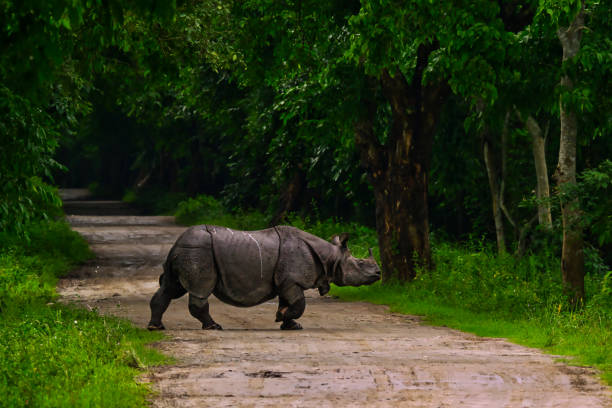
The best time to see the one-horned rhinoceros at Kaziranga is during the winter season from November to February. During these cooler, drier months, the tall elephant grass that defines the park’s landscape is lower and more open, significantly improving sightlines. Wildlife — including rhinos — congregates around water sources as the dry season progresses, making them easier to locate and observe.
Morning safaris between 7:00–9:00 AM are consistently the best for rhino sightings. Elephant safaris, which operate in the early morning, offer a closer and quieter approach than jeep safaris — ideal for rhino viewing at short range.
When is the best time to see tigers at Kaziranga?
Tigers are the most elusive of Kaziranga’s Big Five and sightings require both patience and good timing. The best period for tiger sightings is March and April, when the dry season is most advanced, the grass is at its lowest, and tigers are most active around the remaining water sources. December to February also produces tiger sightings, though the vegetation is slightly denser than in spring.
Morning and late afternoon safaris give the highest probability of tiger encounters — they are active at dawn and dusk and largely invisible during the heat of the day. A rare golden tiger — a Bengal tiger with a genetic condition producing its unusual pale gold colouration — was spotted at Kaziranga in 2025, making international wildlife news and highlighting the park’s extraordinary biodiversity.
When is the best time for birdwatching at Kaziranga?
Kaziranga is one of India’s most important birdwatching destinations, home to more than 480 resident and migratory species. The birdwatching season peaks between November and March, when migratory birds from Central Asia and Siberia arrive at the park’s wetlands and grasslands.
Migratory birds including bar-headed geese, pelicans, and storks flock to Kaziranga between November and March. The park’s diverse habitats — wetlands, grasslands, semi-evergreen woodland, and the braided channels of the Brahmaputra — support an extraordinary variety of species including the greater adjutant stork (critically endangered), Pallas’s fish eagle, grey-headed fish eagle, and numerous species of kingfisher, heron, and egret.
For dedicated birdwatchers, November to February provides the best combination of migratory species and comfortable temperatures.
What Is the Season-by-Season Guide to Kaziranga?
What is Kaziranga like in November and December?
November is the start of the open season and one of the most atmospheric times to visit. The landscape is a deep, rich green from the monsoon rains, the air is clear, and the wildlife is highly active after months of reduced human presence. Temperatures are cool and comfortable (15°C to 22°C during the day). Crowds are manageable — significantly thinner than January.
December is peak season. Temperatures drop to 8°C–12°C at night and 18°C–22°C during the day — comfortable for safari but requiring a warm layer for early morning elephant safaris. The vegetation begins to dry and thin, improving sightlines. Winter mornings often begin with soft mist hovering over the grasslands, creating breathtaking landscapes for photographers. Rhino sightings are excellent, elephant herds are active, and migratory birds are present in large numbers.
What is Kaziranga like in January and February?
January is the peak of peak season — the single busiest and most rewarding month to visit Kaziranga. The grass is at its driest and shortest, sightlines across the open floodplain are at their maximum, and wildlife concentrations around water sources are at their highest. Rhino, elephant, tiger, and wild buffalo sightings are all at their most probable. The cool, clear weather makes long safaris comfortable and photography exceptional.
The downside of January: accommodation books out weeks in advance, safari permits sell out quickly, and the park is at its busiest. Book everything well ahead.
February is an excellent alternative to January — wildlife conditions are equally good (or better for tigers and certain bird species), but the post-January crowd has thinned. Accommodation is easier to find, safari permits are more available, and the atmosphere is slightly more relaxed. February is arguably the best month for the traveller who wants peak wildlife conditions without peak crowds.
What is Kaziranga like in March and April?
March transitions into the pre-monsoon period — temperatures begin to rise (25°C–32°C) and the vegetation is at its driest and most open. Tiger sightings reach their annual peak as the cats become more visible and more active around the shrinking water bodies. Rhino and elephant sightings remain excellent. Bird species begin their northward migration but resident species are highly active.
April is the final month before closure and conditions become warm (30°C–38°C). Wildlife continues to concentrate around water, making sightings good despite the heat. By mid-April, the park begins to prepare for closure — some zones may close early. Most experienced Kaziranga visitors treat April as a last resort rather than a first choice, though budget-conscious travellers will find the lowest accommodation prices of the open season here.
What Are the Safari Options at Kaziranga and What Do They Cost?
What types of safari are available at Kaziranga National Park?
Kaziranga offers two main safari types across four distinct ranges (zones) within the park — Central, Eastern, Western, and Burapahar.
Jeep safari (most common): The primary way most visitors explore Kaziranga. Open jeeps carry up to six passengers with an official guide and driver through the park’s different zones. Jeep safaris at Kaziranga start from ₹1,750 per jeep, with additional entry fees and guide charges. Both morning safaris (departing at dawn, around 7:00 AM) and afternoon safaris (departing around 2:00–3:00 PM) are available. Morning safaris consistently produce better sightings.
Elephant safari: Operated by the Forest Department in the Central and Western ranges in the early morning. Elephant safaris offer a unique close-range, low-impact approach to rhino viewing — the rhinos are significantly less disturbed by elephants than by jeeps, allowing observers to get closer. Elephant safaris require advance booking through the Forest Department or your tour operator and are limited in availability.
Safari zones: The Central Range (Kohora) is the most popular — best for rhino, elephant, and tiger sightings. The Eastern Range (Agoratoli) is less visited and best for swamp deer and buffalo. The Western Range (Bagori) is good for rhinos and elephants. The Burapahar Range is the most remote and least visited, with good chances of seeing gibbons and hornbills in the hilly forest areas.
How do you book Kaziranga safari permits?
Safari permits for Kaziranga must be booked in advance — particularly for the popular Central Range during December and January, when permits sell out well ahead of the date. Booking through your tour operator is the most reliable approach. Online booking is also available through the Assam forest department website.
The park is busiest during weekends and public holidays — consider visiting on weekdays to avoid long lines at the gate and better safari availability.
How Do You Get to Kaziranga and Where Do You Stay?
How do you reach Kaziranga National Park?
Kaziranga is located in Assam in North East India, approximately 250 km from Guwahati — the nearest major city with good transport connections.
By air: Guwahati Airport (LGB) is the main gateway, with direct flights from Delhi (approximately 2 hours), Mumbai (3 hours), and Kolkata (1 hour). From Guwahati, the drive to Kaziranga takes approximately 4.5–5 hours by road.
By train: Guwahati Junction is well connected to Delhi, Kolkata, and other major Indian cities. From Guwahati, hire a private car to Kaziranga. Furkating is the nearest railway station (approximately 75 km from the park) for those coming from Upper Assam.
By road: The park is situated on National Highway 715 between Guwahati and Jorhat. Most visitors stay in Kohora — the main village adjacent to the Central Range — which has the widest range of accommodation from budget guesthouses to premium wildlife lodges.
What is the accommodation like near Kaziranga?
Accommodation options near Kaziranga range from budget guesthouses at ₹800–₹2,000 per night to mid-range resorts at ₹3,000–₹8,000 and premium wildlife lodges at ₹12,000–₹35,000 per night. The better lodges include experienced naturalists, early morning safari arrangements, and evening wildlife talks.
Book accommodation well in advance for December and January — good properties in Kohora sell out 6–8 weeks ahead during peak season.
Frequently Asked Questions
When is the best time to visit Kaziranga National Park?
The best time to visit Kaziranga National Park is between November and February, when the weather is cool and dry, vegetation is lower and more open, and wildlife congregates around water sources making sightings easier. December and January are the peak months — rhino, elephant, tiger, and birdwatching conditions are all at their best. The park is officially open from November to April and closed May to October due to monsoon flooding.
What months is Kaziranga National Park closed?
Kaziranga National Park is closed to tourists from approximately May to October each year, due to the monsoon season and severe flooding from the Brahmaputra River. During the floods, which can submerge up to three-quarters of the park, wildlife migrates to higher ground and the park is completely inaccessible. The park typically reopens in early November, though exact dates depend on flood recession and are confirmed annually by the Assam Forest Department.
What wildlife can you see at Kaziranga National Park?
Kaziranga is famous for its one-horned rhinoceroses — with over 2,600 individuals, it holds more than 70% of the world’s entire one-horned rhino population. Beyond rhinos, the park is home to the park’s Big Five: Royal Bengal Tigers, Asiatic Elephants, Wild Water Buffalo, and Swamp Deer (Barasingha). Kaziranga also has over 480 bird species and is one of India’s premier birdwatching destinations, particularly for migratory species between November and March.
How much does a safari at Kaziranga National Park cost?
Jeep safaris at Kaziranga start from ₹1,750 per jeep, with additional charges for park entry fees, guide fees, and camera permits. For a group of four to six sharing a jeep, the per-person cost works out to approximately ₹500–₹1,000, plus entry fees of around ₹100–₹250 per person. Elephant safaris are priced separately and require advance booking. Premium wildlife lodge packages often include safari costs within the overall package price.
Is it easy to see a one-horned rhinoceros at Kaziranga?
Yes — Kaziranga offers among the highest rhino sighting rates of any wildlife park in the world. With over 2,600 rhinos in a 430 square kilometre area, sightings on jeep and elephant safaris are extremely common, particularly during morning safaris between November and February when the grass is shorter and animals are active. Most visitors see multiple rhinos in a single morning safari. Elephant safaris offer an even closer approach, as rhinos are less disturbed by the presence of elephants than by jeep engines.
Visit Kaziranga with Expert Wildlife Guides
Kaziranga National Park is a highlight of two of The Explora Tours’ most popular itineraries — the Ultimate Wildlife Tour (Bandhavgarh, Kanha, and Kaziranga across 14 days from $4,550 per person) and the North East India Tour (Darjeeling, Kaziranga, and the Brahmaputra River cruise across 13 days from $3,885 per person).
Both tours are timed to the November–February window for the best wildlife conditions. Your Kaziranga experience includes guided jeep safaris across multiple zones with expert naturalists who know the park’s wildlife patterns and the specific areas where rhinos, tigers, and elephants are most consistently found.
Permits, accommodation, safari bookings, and transfers are all arranged before you leave home.