
There is a moment on the White Rann of Kutch — usually in the first hour after sunset, as the last light leaves the sky and the moon rises over an expanse of salt that stretches to the horizon in every direction — when you understand why people travel specifically for this.
The Rann of Kutch is the largest salt desert in the world. For most of the year it is remote, flat, and almost impossibly white — a vast seasonal salt marsh that becomes a dry white plain in the winter months, the salt crystals catching the light in a way that makes the landscape look more like a frozen sea than a desert. It is one of the most surreal and beautiful natural landscapes in Asia.
And then, every year from late October to February, the Gujarat Tourism Board transforms a corner of this desert into one of India’s most celebrated festivals.
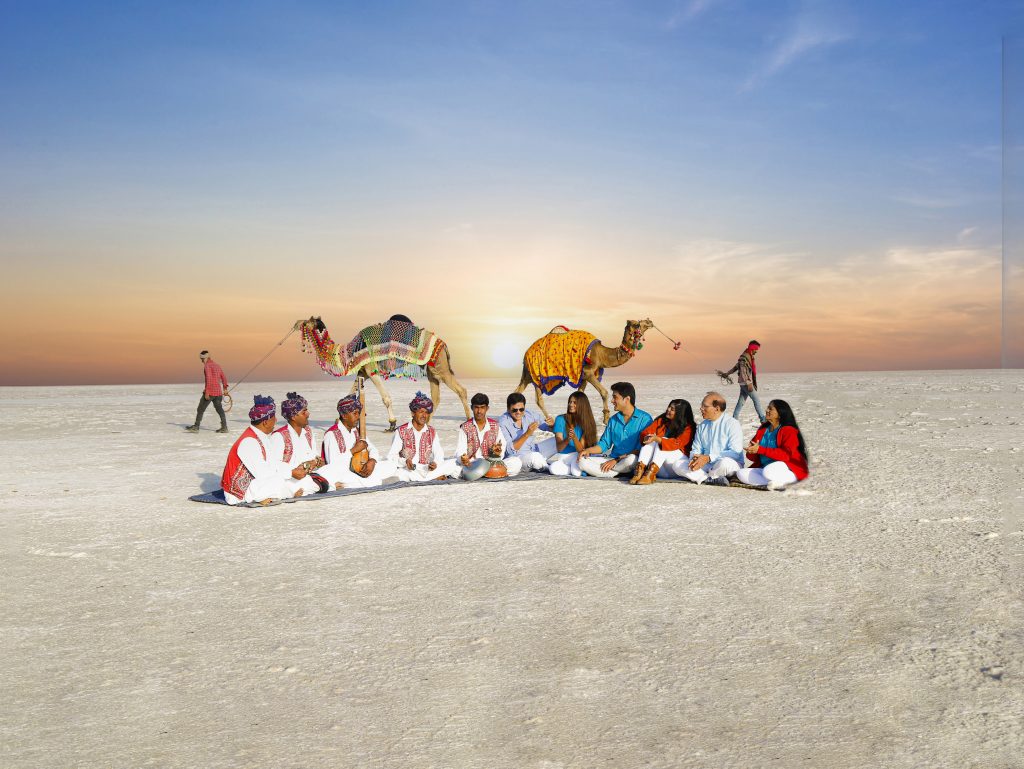
Rann Utsav — the festival of Kutch — is a 100-day cultural carnival held on the edge of the White Rann at the village of Dhordo. A luxury tent city rises from the desert. Folk dancers, musicians, and craft artisans from across Gujarat come to perform. Camel carts, adventure activities, and traditional cuisine fill the days. And on full moon nights — the crown jewel of the entire festival — the white salt desert reflects the moonlight in a way that experienced travellers consistently say cannot be photographed or described. It has to be witnessed.
What Is Rann Utsav and What Actually Happens There?
What is the Rann of Kutch and why is it significant?
The Rann of Kutch is a vast seasonal salt marsh in the Kutch district of Gujarat, western India. It covers approximately 30,000 square kilometres, making it the largest salt desert in the world. During the monsoon season (July to September) the area floods with water from the Arabian Sea and seasonal rains. As the water recedes, it leaves behind a vast flat expanse of white salt crystals that extends to the horizon — one of the most extraordinary natural landscapes in India.
The Rann borders Pakistan to the north and the Arabian Sea to the west and has been historically significant as both a trading route and a natural barrier. The region’s Kutchi people have developed one of the most distinctive crafts traditions in India — embroidery, bandhani (tie-dye), rogan art, and handmade jewellery that are considered among the finest folk art forms in the subcontinent.
What is Rann Utsav and who organises it?
Rann Utsav is Gujarat’s flagship cultural festival, organised by Gujarat Tourism every year in the winter months. The festival is held at Dhordo — a village on the edge of the White Rann approximately 85 km from Bhuj — and centres on a luxury Tent City constructed on the desert’s edge. The festival showcases the cultural and artistic heritage of Kutch through folk music, traditional dance, handicraft bazaars, local cuisine, and the extraordinary natural phenomenon of the full moon over the salt desert.
The festival was significantly boosted by a famous campaign featuring Amitabh Bachchan — “Kutch Nahi Dekha Toh Kuch Nahi Dekha” (If you haven’t seen Kutch, you haven’t seen anything) — which turned Rann Utsav from a regional event into one of India’s most internationally recognised festivals.
What Are the Rann Utsav 2026–27 Dates and the Best Times to Visit?
When does Rann Utsav 2026–27 start and end?
The Rann Utsav 2026–27 season runs from 10 November 2026 to 20 February 2027 — a 100-day cultural festival in the White Rann of Kutch. The Tent City typically remains open until early March 2027 for guests who want to visit after the main festival period has concluded.
The online entry permit for the White Rann at Dhordo is available at rannpermit.gujarat.gov.in.
What are the best dates to visit Rann Utsav 2026–27?
Within the 100-day season, certain dates are significantly more special than others — and these are the dates that book out months in advance.
Full moon nights — the best of everything: Full moon dates in 2026–27 include November 23–25, December 22–24, January 21–23, and February 19–21. When the moon is full, the vast expanse of white salt crystals reflects the moonlight and creates an ethereal silver glow that stretches to the horizon. Experienced travellers consistently say that no photograph can truly capture what it feels like to stand on the White Rann under a full moon. This is the single most sought-after experience at Rann Utsav — book full moon dates at least 3–4 months in advance.
Christmas and New Year (24 December – 1 January): The single busiest period of the entire Rann Utsav season. The combination of the full moon (December 22–24) and New Year’s Eve makes this window exceptionally popular with both Indian and international travellers. Prices are highest and availability tightest during this period — book by August 2026 for best availability.
Republic Day (26 January 2027): Falls during peak festival season and is celebrated with a special cultural programme at the Rann Utsav grounds. Patriotic celebrations, extra performances, and a very festive atmosphere make this a memorable date to visit.
Uttarayan / Kite Festival (14 January 2027): One of Gujarat’s most spectacular celebrations — the sky fills with thousands of colourful kites over the Rann. A uniquely Gujarati experience that coincides with the Rann Utsav season.
Shoulder season (November and February): For visitors who want the Rann Utsav experience without the December–January crowds and premium prices, November and February offer a more relaxed visit. The full moon nights in these months are equally beautiful and significantly easier to book.
How Much Does Rann Utsav Cost and How Do You Book?
What does the Rann Utsav Tent City accommodation cost?
The Tent City at Rann Utsav is a sprawling luxury temporary accommodation complex with over 350 tents ranging from standard to premium suite-level. Packages are offered by Gujarat Tourism and authorised travel partners, typically including accommodation, meals, cultural programmes, and guided access to the White Rann.
Package prices for Rann Utsav 2026–27 start from approximately ₹5,500 per person per night for standard tent accommodation, with mid-range packages running ₹8,000–₹15,000 per person per night and luxury suite packages from ₹20,000+ per person per night. All packages include meals, cultural show access, and White Rann visits.
The price variation depends on the tent category (standard, deluxe, premium, suite), the date of visit (full moon nights and Christmas–New Year are priced 30–50% higher than regular nights), and whether transfers from Bhuj are included.
How do you book Rann Utsav tickets and accommodation?
Booking for the Gujarat Tourism Tent City is available through the official Gujarat Tourism website (gujarattourism.com) and through authorised tour operators including The Explora Tours’ Enchanting West India package.
The online entry permit for the White Rann itself (separate from tent accommodation) is available at rannpermit.gujarat.gov.in.
Important booking guidance:
- Full moon nights and December–January dates sell out 3–4 months in advance — do not leave this to the last minute
- Book as a complete package (accommodation + meals + White Rann access + transfers) through your tour operator for the smoothest experience
- The Tent City does not have many rooms — demand significantly exceeds supply during peak dates
- If you book independently, confirm that your package includes the White Rann evening access, cultural show entry, and breakfast and dinner
What Is the White Rann Experience Actually Like?
What happens when you visit the White Rann at Rann Utsav?
The White Rann experience is the centrepiece of Rann Utsav and the reason most visitors come. From the Tent City, guests are taken by camel cart or jeep to the viewing point on the edge of the salt desert — a distance of a few kilometres — in the late afternoon. From the raised viewing platform, the salt desert stretches white and flat in every direction to the horizon, the sky enormous above it.
As the sun sets and the light changes, the white crystals shift through pink and gold and amber. When the moon rises — and on full moon nights this is the moment everything builds toward — the entire desert surface begins to glow with a soft silver light. The effect is genuinely otherworldly: the flatness of the landscape, the completeness of the silence, and the scale of the moonlit salt make it feel like standing on another planet.
Folk musicians and dancers often perform near the viewing area in the evening — the sound of Kutchi music across the salt desert under a full moon is one of those travel experiences that people describe for years afterward.
What activities are available at Rann Utsav beyond the White Rann?
Cultural shows and performances: Every evening at the Tent City, folk dancers and musicians perform traditional Kutchi and Gujarati art forms — Garba, Bhavai dance, puppet shows, and regional music. The performances are included in most tent packages.
Craft bazaars: The festival hosts a permanent craft market featuring artisans from across Kutch selling embroidery, bandhani textiles, rogan art (a rare gold thread painting technique unique to Kutch), handmade jewellery, and ceramics. This is the best place in India to buy authentic Kutchi handicrafts directly from the artisans who make them.
Adventure activities: ATV desert rides, camel safaris, paramotoring, zipline, and desert cycling are available within the Tent City area. These are particularly popular with younger visitors and families.
Day trips from the Tent City: The surrounding Kutch region has extraordinary heritage to explore between Rann visits — the UNESCO heritage city of Ahmedabad (3 hours by road), the ancient fortified village of Dholavira (2.5 hours), the wildlife sanctuary of the Banni grasslands (30 minutes, home to the rare wild ass and flamingos), and the craft villages of Nirona (Rogan art) and Bhujodi (weaving).
How Do You Get to Rann Utsav and Where Is It?
How do you reach the Rann Utsav Tent City at Dhordo?
The Rann Utsav Tent City is located at Dhordo village, approximately 85 km from Bhuj city centre (1.5–2 hours by road). Bhuj is the main gateway to the Rann of Kutch.
By air: The nearest airport is Bhuj Airport, which has direct flights from Mumbai (approximately 1 hour 20 minutes) and connections from Delhi, Ahmedabad, and other major Indian cities. From the airport, the Tent City is 85 km by road — most packages include transfers from Bhuj Airport or Bhuj city.
By train: Bhuj has a railway station connected to Ahmedabad (approximately 7–8 hours by express train), Mumbai, and Delhi. From Bhuj station, a taxi to the Tent City costs ₹1,200–₹1,800.
By road from Ahmedabad: Ahmedabad is the nearest major city (approximately 5–6 hours by road from Dhordo). A private car from Ahmedabad to the Tent City costs ₹4,000–₹6,000 one way. Many visitors fly into Ahmedabad, spend a day in the city, and drive to Dhordo the following day.
What Practical Things Should You Know Before Going to Rann Utsav?
What should first-time Rann Utsav visitors be aware of?
Book full moon nights as early as possible. Full moon dates are the most coveted in the entire season and typically sell out 3–4 months before the festival date. If your trip falls in December or January, book accommodation by August at the absolute latest.
Bring warm clothing. The Rann of Kutch is a desert, and desert nights in December and January can be genuinely cold — temperatures drop to 8–12°C after dark. A warm jacket or fleece is essential for the White Rann evening experience.
Wear white if possible. It’s not a requirement, but wearing white clothing on the White Rann — as many visitors do — creates an extraordinary photographic effect and is a popular tradition among experienced Rann Utsav visitors.
Hire a guide at the craft villages. The artisan villages around Kutch (Nirona, Bhujodi, Ajrakhpur) are most rewarding with a guide who can introduce you directly to the craft families and explain the techniques. Most packages can arrange this.
The entry permit is mandatory. All visitors to the White Rann require an entry permit, available at rannpermit.gujarat.gov.in. This is separate from your Tent City accommodation booking. Most full-package bookings include this, but verify before you arrive.
Gujarat is a dry state. Alcohol is prohibited throughout Gujarat. The Tent City operates within state law — no alcohol is available. Plan accordingly, and embrace the lassi and fresh coconut water instead.
Frequently Asked Questions
When is Rann Utsav 2026–27 and how long does it last?
The Rann Utsav 2026–27 season runs from 10 November 2026 to 20 February 2027 — a 100-day cultural festival held at Dhordo village on the edge of the White Rann of Kutch in Gujarat. The festival is organised by Gujarat Tourism and centres on a luxury Tent City with over 350 tents. The Tent City typically remains open until early March 2027.
What is the best time to visit Rann Utsav?
The best time to visit Rann Utsav is on a full moon night, when the White Rann reflects the moonlight across its vast salt surface, creating an otherworldly silver glow that stretches to the horizon. Full moon dates in the 2026–27 season include November 23–25, December 22–24, January 21–23, and February 19–21. Of these, the December full moon combined with the Christmas period is the most popular — and the most heavily booked. For the full moon experience without the peak-season crowd and pricing, the November and February full moons are excellent alternatives.
How much does Rann Utsav tent accommodation cost in 2026–27?
Rann Utsav Tent City packages start from approximately ₹5,500 per person per night for standard tents, rising to ₹8,000–₹15,000 for deluxe and premium tents, and ₹20,000+ for luxury suites. Prices are 30–50% higher during full moon nights, Christmas–New Year, and Republic Day compared to regular season dates. Packages typically include accommodation, all meals, cultural show access, and guided White Rann visits.
How do you get to Rann Utsav from Mumbai or Delhi?
From Mumbai, the most practical route is to fly to Bhuj Airport (approximately 1 hour 20 minutes direct), then transfer by road 85 km to the Tent City at Dhordo (1.5–2 hours). Most packages include the Bhuj transfer. From Delhi, fly to Bhuj directly or connect via Mumbai or Ahmedabad. Alternatively, from Ahmedabad (connected to both Delhi and Mumbai by direct flights), it is a 5–6 hour road journey to Dhordo.
Is Rann Utsav suitable for international tourists?
Yes — Rann Utsav is well set up for international visitors. The Tent City has comfortable modern facilities, English-speaking staff, an excellent variety of traditional Gujarati cuisine, and guided activities. The White Rann experience — particularly on full moon nights — is genuinely one of the most extraordinary natural spectacles in Asia and draws visitors from across the world. The combination of the landscape, the folk culture of Kutch, and the craft traditions of the region make it one of India’s most rewarding and unusual travel experiences.
Experience Rann Utsav as Part of Our Enchanting West India Tour
The Rann of Kutch and Rann Utsav are central to The Explora Tours’ Enchanting West India Tour — a 13-day journey through Gujarat and Maharashtra that combines the UNESCO heritage city of Ahmedabad, the Asiatic lions of Gir National Park, the ancient Jain pilgrimage site of Palitana, and the extraordinary landscape of the White Rann.
Our Enchanting West tour is timed to include at least one full moon night at the White Rann, with expert guides who know the craft villages, the artisan families, and the best viewing positions on the salt desert. Tent City accommodation, White Rann permits, transfers from Bhuj, and all cultural activities are arranged before you leave home.
Prices start from $5,560 per person for 13 days, inclusive of hand-picked accommodation, expert guides, private transfers, and most meals.