
India is one of the world’s great wildlife destinations — and one of its most underestimated.
Most people who have never been think of India primarily as a cultural destination: temples, forts, festivals, food. What surprises first-time visitors is the scale and quality of the wildlife experience. India has the largest population of wild tigers on Earth. It has the last wild Asiatic lions. It holds more than 70% of the world’s entire one-horned rhinoceros population. Its national parks and wildlife sanctuaries cover over 5% of the country’s total land area — a protected estate that rivals anything in Africa in terms of biodiversity and conservation success.
India has more than 570 wildlife sanctuaries and over 160 national parks, created under the Wildlife Protection Act 1972 to protect biodiversity and natural habitats. Not all of them are worth a long-haul flight. But the best of them — the parks that have achieved genuine conservation success and offer world-class safari experiences — deserve to be on every serious wildlife traveller’s list.
This guide ranks India’s best wildlife sanctuaries for international visitors in 2026, with honest assessments of what each park offers, what it does better than anywhere else in the world, and what type of traveller each one suits best.
The short version: Bandhavgarh for tiger probability, Kaziranga for rhinos and biodiversity, Ranthambore for accessibility, Gir for Asiatic lions, Sundarbans for uniqueness, Periyar for elephants, Jim Corbett for history and landscape. Visit as many as you can.
Which Are the Best Wildlife Sanctuaries in India and How Are They Ranked?
This guide ranks India’s top wildlife sanctuaries across five criteria: wildlife sighting quality, uniqueness of experience, accessibility for international visitors, conservation status, and overall safari experience. The result is a practical guide for travellers — not an academic classification.
What Is the Best Tiger Reserve in India for Safari?
1. Bandhavgarh National Park, Madhya Pradesh — best for tiger sightings
Signature species: Royal Bengal Tiger, Leopard, Sloth Bear, Indian Bison Best season: November to March Park size: 1,536 sq km (core + buffer)
Bandhavgarh is the undisputed champion for tiger sighting probability. Bandhavgarh National Park is famous for having the highest tiger density amongst all tiger reserves in India — more tigers concentrated in a smaller area than any comparable reserve in the country. For a traveller whose primary goal is seeing a Bengal tiger in the wild, no park in India gives better odds.
What makes Bandhavgarh exceptional beyond the tigers: the ancient Bandhavgarh Fort within the core forest, the rock-cut cave temples and medieval statues that share the forest with wildlife, and a landscape of sal forest, bamboo groves, and rugged hillocks that makes every sighting feel like a discovery. The Tala Zone is the most productive for tiger sightings; the Magdhi Zone offers a quieter experience with comparable wildlife.
Who it suits: First-time India safari visitors, tiger enthusiasts, photographers wanting dramatic forested backdrops.
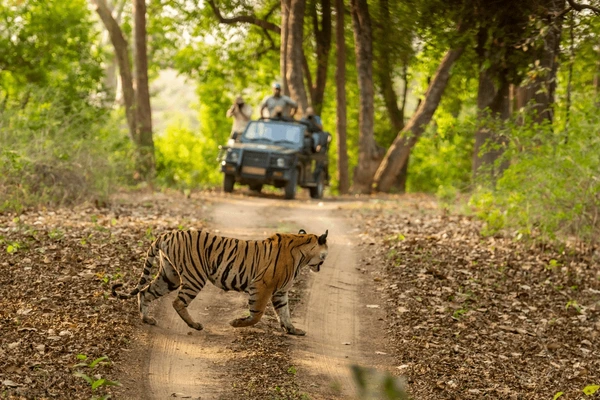
2. Kanha Tiger Reserve, Madhya Pradesh — best for overall safari experience
Signature species: Royal Bengal Tiger, Hard-Ground Barasingha (found nowhere else on Earth), Wild Dog, Indian Bison Best season: November to April Park size: 2,051 sq km (core + buffer)
Kanha is ideal for those who want more than just a tiger sighting — it is perfect for travellers who appreciate diverse wildlife, scenic landscapes, and a tranquil jungle atmosphere. The great open meadows (maidans) of Kanha are among the most beautiful grassland landscapes in India, and the park’s conservation achievement in rescuing the hard-ground barasingha from extinction — found only here and nowhere else in the world — gives it a unique ecological significance.
Kanha’s size means the safari experience is more immersive and less crowded than Bandhavgarh. Tiger sightings are excellent but require more patience. What you get in return is a richer, more diverse wildlife encounter across a more varied landscape.
Who it suits: Wildlife photographers, those with 3+ nights to spend, travellers who want the deepest jungle atmosphere.
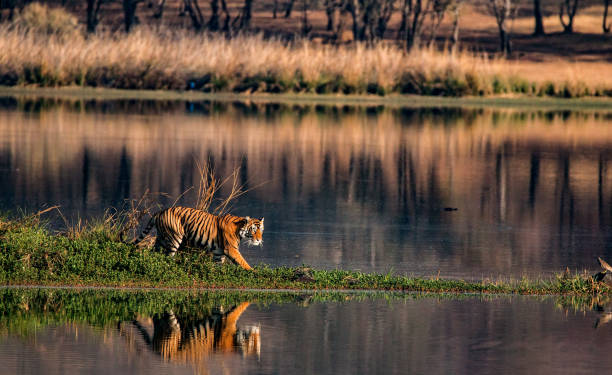
Where Can You See One-Horned Rhinoceroses in India?
3. Kaziranga National Park, Assam — best for rhinos and biodiversity
Signature species: Indian One-Horned Rhinoceros, Royal Bengal Tiger, Asian Elephant, Wild Water Buffalo, Swamp Deer Best season: November to April Park size: 430 sq km (core)
Kaziranga is a UNESCO World Heritage Site and home to two-thirds of the world’s one-horned rhinoceroses — it is rich in elephants, swamp deer, and wild water buffalo, spread over 430 sq km and often listed among the densest wildlife areas in India.
Kaziranga is not just India’s best rhino park — it is one of the great conservation success stories of the 20th century. When protection began, fewer than a dozen rhinos remained. Today the population exceeds 2,600. The park’s combination of rhino safaris (with elephant and jeep options), tiger sightings, migratory birdwatching, and the extraordinary landscape of tall elephant grass, wetlands, and Brahmaputra floodplain makes it the most biodiverse of all India’s major wildlife parks.
The elephant safari at dawn — moving silently through the tall grass while rhinos graze around you — is one of the most extraordinary wildlife experiences in Asia.
Who it suits: Wildlife enthusiasts wanting biodiversity over single-species focus; birdwatchers; photographers; anyone visiting North East India.
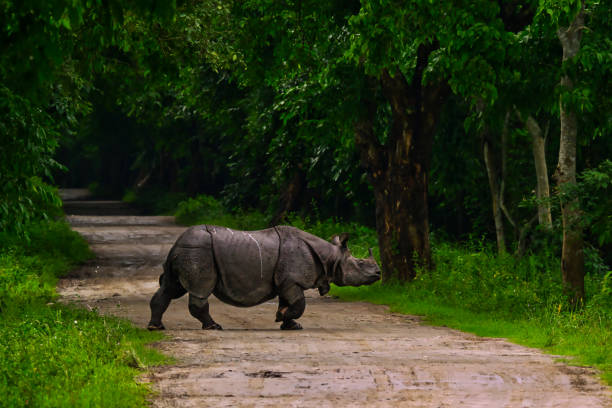
4. Ranthambore National Park, Rajasthan — best for first-time safari visitors
Signature species: Royal Bengal Tiger, Leopard, Marsh Crocodile, Sambar Deer Best season: October to June (park stays open through summer unlike most) Park size: 1,334 sq km (core + buffer)
Ranthambore is one of the best places to see Bengal tigers in the wild — the park’s unique blend of historical ruins and natural beauty creates an enchanting setting for wildlife observation. In addition to tigers, visitors can spot leopards, sambar deer, and marsh crocodiles. Ranthambore’s picturesque lakes and rugged terrain add to the park’s allure.
What sets Ranthambore apart for international visitors is its combination of accessibility and spectacle. The park is easily reached from Jaipur (3 hours) and Delhi (6 hours), making it the most natural addition to a Golden Triangle tour for wildlife lovers. The Ranthambore Fort — a 10th-century citadel that rises from the forest — gives the safari a historical dimension found nowhere else in India. Tigers have been photographed climbing the fort walls and resting in its ancient chambers.
Safari bookings for Ranthambore are available online through the official government portal, making permit access more straightforward than some other parks.
Who it suits: First-time safari visitors; those combining wildlife with a Rajasthan cultural tour; travellers with limited time who need a park close to major cities.
Where Can You See Asiatic Lions in the Wild?
5. Gir National Park, Gujarat — the only place in the world to see wild Asiatic lions
Signature species: Asiatic Lion, Leopard, Striped Hyena, Marsh Crocodile Best season: December to March Park size: 1,412 sq km (total sanctuary)
Gir is the only place in the world where you can see Asiatic Lions in the wild — apart from lions, the sanctuary supports leopards, hyenas, and hundreds of bird species.
This fact alone makes Gir irreplaceable. The Asiatic lion — smaller and more social than its African counterpart — was reduced to fewer than 20 individuals in the early 20th century. Today the Gir population exceeds 670, one of the most dramatic wildlife recoveries in history. Unlike African safari vehicles which maintain strict distances, Gir’s jeep safaris often come extraordinarily close to lion prides resting in the shade of teak forest — the intimacy of the encounter is remarkable.
Gir is most naturally combined with the Rann of Kutch festival (Rann Utsav) and the heritage city of Ahmedabad on a western India circuit — which is exactly what The Explora Tours’ Enchanting West India tour covers.
Who it suits: Wildlife travellers with a specific lion-viewing goal; those combining Gujarat cultural tourism with a safari; anyone interested in conservation success stories.
What Is the Most Unique Wildlife Experience in India?
6. Sundarbans National Park, West Bengal — the world’s largest mangrove forest
Signature species: Royal Bengal Tiger (the only swimming tigers in the world), Estuarine Crocodile, Irrawaddy Dolphin, Olive Ridley Sea Turtle Best season: November to February Park size: 1,330 sq km (Indian side of a cross-border reserve with Bangladesh)
Sundarbans is famous for its unique mangrove forests and swimming tigers — the only tigers in the world that have adapted to a semi-aquatic life, swimming between the tidal islands of the world’s largest mangrove delta. A Sundarbans safari is conducted by boat through the labyrinthine tidal channels rather than by jeep — you drift through the mangrove forest listening for the movement of the forest, scanning the mudflats and channel edges for tiger pugmarks or the enormous saltwater crocodiles that also patrol these waters.
Tiger sightings in the Sundarbans are rare and unpredictable — this is the most elusive tiger population in India, adapted to a habitat where they are genuinely difficult to see. The experience is more about atmosphere, landscape, and the extraordinary sensation of being in a place that feels genuinely wild and ancient. Birdwatching is exceptional: kingfishers, herons, storks, and raptors line the channel edges.
Who it suits: Experienced wildlife travellers seeking something genuinely different; birdwatchers; those who have already seen tigers in central India and want a completely different kind of wildlife encounter.
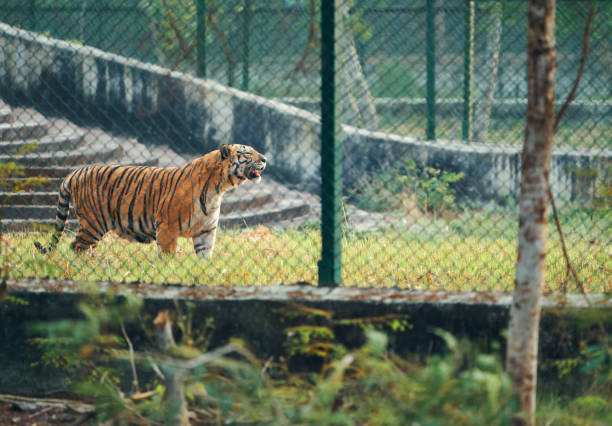
7. Jim Corbett National Park, Uttarakhand — India’s oldest and most historically significant
Signature species: Royal Bengal Tiger, Asian Elephant, Leopard, Gharial Crocodile Best season: November to June Park size: 520 sq km (core, part of Corbett Tiger Reserve)
Established in 1936, Jim Corbett is India’s oldest sanctuary and a must-visit for tiger lovers — spread across 520 sq km, it is part of the Corbett Tiger Reserve and offers jeep safaris and forest lodges, making it one of the best wildlife sanctuaries in India for wildlife photography and tiger sightings.
Corbett has the dual advantage of extraordinary wildlife (tiger sightings are very good, particularly in the Dhikala zone) and spectacular landscape — the park sits in the Himalayan foothills of Uttarakhand, and the combination of Sal forest, river valleys, and mountain backdrop makes it one of the most beautiful settings of any Indian wildlife park. The Ramganga River that runs through the park draws wildlife to its banks at dawn and dusk and is one of the best spots in India for gharial (the long-snouted fish-eating crocodile) sightings.
Who it suits: Those combining wildlife with a Himalayan foothills trip; photographers wanting mountain-backed wildlife landscapes; nature lovers wanting a longer, more immersive forest experience.
What Are the Best Wildlife Sanctuaries in South India?
8. Periyar Tiger Reserve, Kerala — best for elephant viewing in South India
Signature species: Asian Elephant, Tiger, Leopard, Sloth Bear, Lion-Tailed Macaque Best season: October to May Park size: 925 sq km
For elephant lovers, Periyar in Kerala offers boat rides where you can watch herds bathing in the lake — the experience of drifting on Periyar Lake in a wooden boat while elephant herds wade into the water around you is one of India’s most iconic wildlife encounters.
Periyar is situated in the Western Ghats — a UNESCO World Heritage biodiversity hotspot — and the surrounding forest is extraordinarily rich in both mammals and birds. The rare lion-tailed macaque is found here, along with excellent populations of elephants (sightings from the lake boat are near-guaranteed in morning sessions) and good tiger presence, though sightings are less frequent than in the central India reserves.
The park’s location in Kerala also makes it a natural combination with a Kerala backwaters houseboat cruise — one of the finest South India itinerary combinations available.
Who it suits: Those on a South India tour; elephant enthusiasts; birdwatchers; families wanting a gentle, boat-based wildlife experience.
9. Nagarhole National Park, Karnataka — South India’s tiger reserve
Signature species: Tiger, Leopard, Asian Elephant, Dhole (Indian Wild Dog), Gaur Best season: October to May Park size: 643 sq km
Nagarhole (part of the larger Nagarahole-Bandipur-Mudumalai complex in the Western Ghats) is South India’s finest tiger reserve and offers a consistently excellent safari experience. The park has strong tiger and leopard populations, extraordinary elephant herds, and one of the best dhole (Indian wild dog) viewing opportunities in the country.
The coffee plantation landscape surrounding the park gives the approach to Nagarhole a distinctive and beautiful character — misty hills, aromatic coffee estates, and the abrupt transition into dense forest as you enter the reserve. The Kabini River, which forms the southern boundary of Nagarhole, is one of the finest wildlife viewing spots in India during the dry season when animals gather along its banks.
Who it suits: Those on a South India tour wanting a wildlife element; coffee estate enthusiasts; travellers wanting a smaller, more intimate park than the central India reserves.
How Do You Choose Which Indian Wildlife Sanctuary to Visit?
What is the best wildlife sanctuary in India for first-time visitors?
For a first-time India safari visitor with limited days, Ranthambore is the most practical choice — it is closest to the Golden Triangle tourist circuit (Jaipur is 3 hours away), has excellent tiger sighting rates, and requires no additional flights to reach. Add 2 nights at Ranthambore to any Rajasthan itinerary and you get a genuinely world-class wildlife experience without significant additional travel time.
For those with a dedicated wildlife focus and the time to travel to central India, Bandhavgarh gives the highest tiger sighting probability of any park in India. For the richest overall wildlife experience combining multiple species, Kaziranga is unmatched. For something genuinely unlike anywhere else in the world, Gir (Asiatic lions) and Sundarbans (swimming tigers in mangroves) are irreplaceable.
What is the best wildlife sanctuary in India for seeing tigers?
Bandhavgarh National Park in Madhya Pradesh has the highest tiger density of any tiger reserve in India, making it the single best park for tiger sighting probability. Ranthambore in Rajasthan is the most accessible option for those based in Delhi or Jaipur. Kanha Tiger Reserve offers excellent sightings with a richer overall wildlife experience. All three are world-class tiger destinations — the choice depends on your location, time, and what you want beyond the tiger itself.
Which Indian national park has the most one-horned rhinoceroses?
Kaziranga National Park in Assam holds the largest population of Indian one-horned rhinoceroses in the world — over 2,600 individuals representing more than two-thirds of the global one-horned rhino population. Kaziranga is a UNESCO World Heritage Site and one of the great conservation success stories of the 20th century. Pobitora Wildlife Sanctuary near Guwahati holds the highest density of one-horned rhinos (more per square kilometre) but Kaziranga has the largest overall population.
Where can you see Asiatic lions in India?
Gir National Park and Wildlife Sanctuary in Gujarat is the only place in the world where wild Asiatic lions can be seen. The Gir lion population has grown from fewer than 20 individuals in the early 20th century to over 670 today — one of the most dramatic wildlife recoveries in conservation history. Safari permits for Gir must be booked in advance through the Gujarat Forest Department portal.
What is the best time of year to visit Indian wildlife sanctuaries?
The best time to visit most Indian wildlife sanctuaries is between November and March, when temperatures are cool, vegetation is lower for better sightlines, and wildlife concentrates around water sources making sightings easier. Most central Indian parks (Bandhavgarh, Kanha, Ranthambore) are open November to June and closed July to October for the monsoon season. Kaziranga follows the same seasonal calendar. Gir and Periyar in South and West India are open year-round but best visited October to May.
How many wildlife sanctuaries does India have?
India has more than 570 wildlife sanctuaries and over 160 national parks, established under the Wildlife Protection Act 1972 to protect biodiversity and natural habitats. These protected areas cover over 5% of India’s total land area and range from high-altitude Himalayan habitats in Ladakh and Sikkim to coastal mangroves in the Sundarbans and tropical forests in the Western Ghats. Of these, around 55 are designated as Project Tiger reserves — the most intensive level of tiger habitat protection in the world.
Explore India’s Wildlife with Expert Naturalist Guides
India’s wildlife sanctuaries are best experienced with expert guidance — a specialist naturalist who knows the individual tigers, the tracking patterns, the best zones for specific species, and the stories behind the landscapes transforms a good safari into an extraordinary one.
The Explora Tours’ Ultimate Wildlife Tour combines three of India’s finest reserves — Bandhavgarh, Kanha, and Kaziranga — across 14 expertly guided days. You get central India’s tiger heartland and North East India’s rhino paradise in a single carefully designed itinerary, with premium wildlife lodge accommodation, specialist naturalists, and all safari permits arranged before you leave home.
Prices start from $4,550 per person for 14 days, inclusive of luxury lodge accommodation, all safaris, internal flights, expert naturalist guides, and most meals.