
India is the birthplace of yoga, the home of Ayurveda, and the origin point of meditation traditions that are now practised by hundreds of millions of people across the world. For anyone drawn to wellness travel — whether that means a week of morning yoga on the banks of the Ganges, a full Panchakarma Ayurvedic detox in Kerala, a silent Vipassana meditation retreat in the mountains, or simply a few days of extraordinary calm in a place specifically designed for it — India offers experiences that no other country can match in depth, authenticity, or value.
The range of what’s available is genuinely extraordinary. From Himalayan ashrams to Kerala Ayurvedic resorts, Goa beach retreats to Rishikesh yoga schools — no other country offers this breadth of wellness programming across this many distinct landscapes. And the value is remarkable: programs that would cost $3,000 to $5,000 in Europe or North America are available in India for $300 to $800, with accommodation, meals, and all sessions included.
The challenge is not finding a yoga retreat or wellness programme in India. The challenge is choosing the right one from hundreds of options — knowing which regions suit which goals, which programmes are genuinely traditional and which are tourist-facing, and what to expect from each experience before you commit.
This guide covers everything: the four main wellness regions in India, what each offers, the best ashrams and retreat centres in each, accurate 2026 pricing, and how to choose the right experience for your goals and background.
The direct answer for most first-time wellness travellers: Rishikesh for yoga, meditation, and spiritual depth. Kerala for Ayurveda, Panchakarma, and physical restoration. Goa for a gentler, more accessible introduction to yoga alongside a beach holiday. The Himalayas for serious meditation and altitude-enhanced practice.
Why Is India the World’s Best Destination for Yoga and Wellness Retreats?
What makes India different from other yoga retreat destinations?
India’s advantage in wellness travel is not simply heritage — though the heritage is real and profound. Yoga originated in India, Ayurveda was developed here over 5,000 years, and the meditation traditions practised at the world’s finest retreat centres trace their lineage directly to Indian teachers and Indian texts.
What makes India practically superior to other yoga retreat destinations in 2026 is the combination of teaching depth, environmental immersion, and extraordinary value. The depth of instruction in India is unmatched — budget ashram retreats in Rishikesh start at $150 to $400 for a week including accommodation, vegetarian meals, and daily yoga, while premium Ayurvedic and wellness experiences in Kerala reach $1,000 to $3,000.
Practising yoga on the banks of the Ganges in the Himalayan foothills, receiving Ayurvedic treatment from a physician whose family has practised it for generations, or sitting in a meditation hall where the tradition has been unbroken for centuries — these are not experiences that can be replicated in a studio in California or a resort in Bali, regardless of the quality of instruction or the beauty of the setting.
Guest reviews consistently highlight two things: the depth of teaching and the value for money. The quality of instruction at the best Indian retreat centres is world-class.
What Are the Four Main Wellness Regions in India and What Does Each Offer?
Which region of India is best for your wellness goals?
India’s wellness geography divides into four distinct regions, each with its own character, tradition, and type of experience:
Rishikesh — yoga, meditation, and spiritual depth in the Himalayan foothills Kerala — Ayurveda, Panchakarma, and physical restoration in tropical South India Goa — accessible yoga and wellness with a beach backdrop The Himalayas — serious meditation, altitude practice, and remote retreat immersion
What Makes Rishikesh the Yoga Capital of the World?
Why do serious yoga practitioners come specifically to Rishikesh?
Rishikesh offers the best overall value for serious yoga practitioners. The combination of affordable prices, deep teaching expertise, and unmatched spiritual energy makes it the top choice for most retreat seekers.
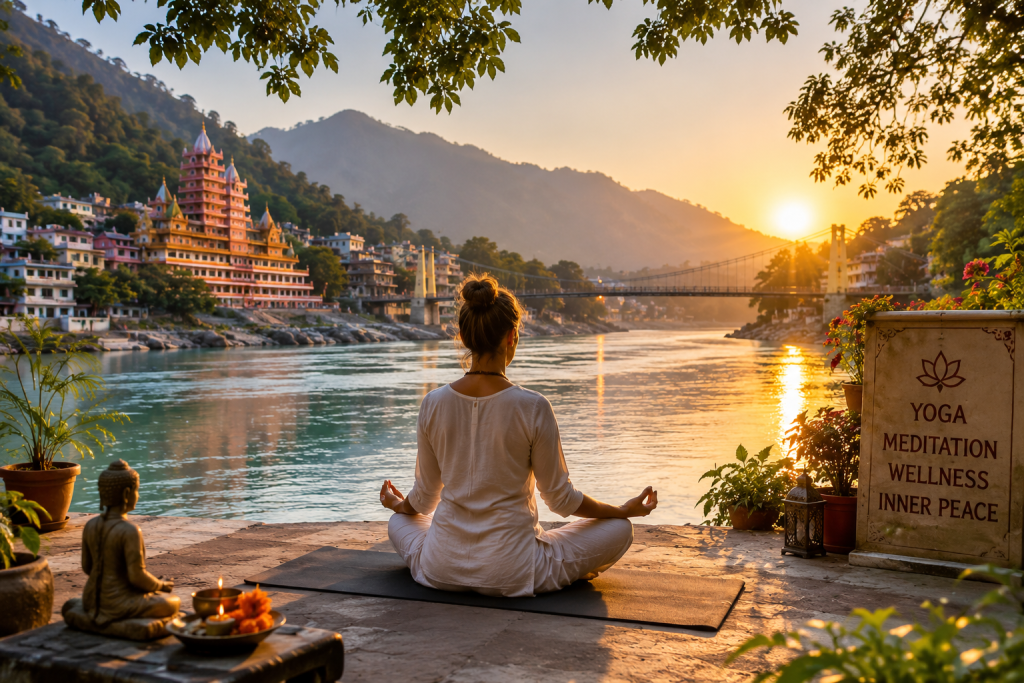
Rishikesh is the Yoga Capital of the World with the highest concentration of experienced teachers and Yoga Alliance registered schools in India. The spiritual atmosphere is unmatched — practicing on the banks of the Ganges with Himalayan foothills in every direction creates a depth of experience that beach destinations cannot replicate. Areas like Tapovan offer a peaceful, focused environment perfect for retreats. The presence of ancient ashrams, daily Ganga Aarti at Ram Jhula and Triveni Ghat, and a vegetarian-only town policy reinforce the yogic lifestyle.
For wellness travellers, Rishikesh offers every level of experience and every style of programme — from drop-in classes for curious tourists to intensive 200-hour and 300-hour yoga teacher training programmes for practitioners who want a formal qualification. Between these extremes sits the sweet spot for most international visitors: a 7 to 14-day residential programme combining morning asana practice, pranayama, meditation, yoga philosophy, and the extraordinary environment of the Himalayan foothills.
What are the best yoga ashrams and retreat centres in Rishikesh in 2026?
Parmarth Niketan is the largest and most internationally recognised ashram in Rishikesh — a campus of several hundred rooms on the banks of the Ganges offering daily yoga, meditation, philosophy classes, and the nightly Ganga Aarti ceremony from its private ghat. It is the most accessible option for international visitors wanting a genuine ashram experience with comfortable facilities. Residential programmes are available from a few days to several weeks. Well-suited to first-time retreat visitors.
Sivananda Ashram (Divine Life Society) was founded in 1936 by Swami Sivananda Saraswati and is one of the most revered and longest-established ashrams in Rishikesh. The programme combines asana practice, pranayama, meditation, and philosophical study in a traditional structure with early morning starts (5:00 AM) and simple vegetarian meals. Less oriented toward international tourists than some ashrams — appropriate for serious practitioners who want genuine immersion rather than a comfortable holiday with yoga added.
Veda 5 is a top-rated professional yoga and Ayurvedic retreat centre in the hills near the Neelkanth Temple — one of the most respected options in Rishikesh for those seeking a luxury yoga holiday that retains genuine teaching depth without the austerity of a traditional ashram. Ideal for those wanting a relaxing luxury yoga holiday and Ayurveda retreat in Rishikesh that won’t break the bank — highly professional with a focus on both asana and Ayurvedic treatments.
Yoga Vidya Mandiram is consistently rated among the most popular and top-rated yoga schools in Rishikesh for international visitors. Located in Tapovan and within walking distance of the Ganges and the main ashram area — what makes this retreat stand out is the included excursions to nearby shrines, temples, caves, and waterfalls, as well as a fire ceremony. It covers traditional hatha yoga, pranayama, meditation, mudras, mantra chanting, and yoga philosophy. From $399 for 7 days including accommodation and meals.
Phool Chatti Ashram sits 14 km upstream from Rishikesh in a quieter forest setting and offers one of the most genuinely immersive residential experiences available — early mornings (5:00 AM), simple meals, no-phone policy during programme hours, and a daily schedule built around traditional practice rather than tourist convenience. For serious practitioners who want the real thing rather than a comfortable introduction.
What does a yoga retreat in Rishikesh cost in 2026?
Budget ashram retreats in Rishikesh start at $150 to $400 for a week including accommodation, vegetarian meals, and daily yoga. Mid-range programmes with better rooms and additional experiences (sound healing, massage, excursions) run $400 to $1,000. Luxury yoga and Ayurvedic retreat centres with premium accommodation and additional treatments run $1,000 to $2,500 per week.
What Is Ayurveda and Why Is Kerala the Best Place to Experience It?
What is Ayurveda and what can it do for you?
Ayurveda is India’s ancient system of natural medicine — a holistic approach to health and wellbeing that has been practised continuously for over 5,000 years. Based on the principle that health emerges from balance between the body’s three fundamental energies (doshas), Ayurveda uses a combination of dietary guidance, herbal medicines, oil treatments, cleansing therapies, and lifestyle practices to restore and maintain wellbeing.
Kerala is the birthplace of Ayurveda and the place where the tradition has been most faithfully preserved and continuously practised. The humid tropical climate of Kerala, its extraordinary biodiversity of medicinal plants, and the generations of Kerala families who have passed Ayurvedic knowledge from father to son and mother to daughter for centuries combine to make it the world’s foremost destination for authentic Ayurvedic treatment.
What is Panchakarma and is it worth doing in Kerala?
Panchakarma — “five actions” — is Ayurveda’s most intensive cleansing and rejuvenation programme, designed to eliminate accumulated toxins (ama) from the body and restore balance to the doshas. A full Panchakarma programme typically runs 7 to 21 days and involves a sequence of preparatory treatments, the five core cleansing therapies, and a post-treatment restoration phase.
For those who have never experienced Ayurvedic treatment, the most accessible entry point is a shorter programme (4 to 7 days) combining daily treatments — Abhyanga (full-body oil massage), Shirodhara (warm oil poured in a continuous stream on the forehead), and Kizhi (herbal bolus treatments) — with dietary guidance and consultation with an Ayurvedic physician. Even a 4-day programme produces a noticeable shift in energy and wellbeing that most guests find compelling enough to return for longer.
What are the best Ayurvedic retreat centres in Kerala in 2026?
CGH Earth (Kalari Rasayana, near Kollam) is one of Kerala’s finest and most authentic Ayurvedic resorts — situated in a heritage coconut estate on the backwaters with a serious medical Ayurveda programme led by qualified Ayurvedic physicians. The treatments use traditional Kerala Ayurveda protocols and their own pharmacy of freshly prepared herbal medicines. Full Panchakarma programmes of 14 to 21 days available alongside shorter introductory programmes. Premium pricing (from $200 per day inclusive of accommodation, treatments, and meals) reflects the medical rigour of the programme.
Somatheeram Ayurvedic Village near Kovalam beach is among the most internationally recognised Ayurvedic resorts in Kerala — winner of multiple international wellness awards and operating since 1990. Set on a cliff above the Arabian Sea with its own beach, it offers programmes from 7 to 28 days combining Panchakarma treatments with yoga, meditation, and Ayurvedic diet. Mid to premium pricing (from $100 to $250 per day depending on programme and room type).
Kairali Ayurvedic Village in Palakkad (the gateway to Kerala’s highlands) is considered one of the most medically authentic Ayurvedic healing villages in India — a retreat specifically designed for serious wellness seekers rather than tourists looking for a spa experience. The treatments are supervised by qualified Ayurvedic doctors and the programme is genuinely therapeutic rather than pampering. More remote than the Kovalam or Alleppey options, which contributes to its therapeutic effectiveness.
Sivananda Yoga Vedanta Dhanwantari Ashram near Neyyar Dam in southern Kerala combines a traditional yoga programme with authentic Ayurvedic treatments in a forest ashram setting — one of the few places in India where serious yoga practice and genuine Ayurvedic medicine exist within the same programme. Accessible pricing (from $50 to $100 per day inclusive) and a traditional schedule make it ideal for practitioners who want depth over luxury.
What does an Ayurvedic retreat in Kerala cost in 2026?
Premium Ayurvedic and wellness retreats in Kerala reach $1,000 to $3,500 for a week-long programme. Mid-range programmes at good-quality Ayurvedic resorts run $700 to $1,500 per week, inclusive of accommodation, all meals, daily treatments, and physician consultations. Budget options at ashram-based programmes start from $400 to $700 per week. A 4 to 7-day introductory programme is the right starting point for most first-time visitors.
What Does Goa Offer for Wellness Travellers?
Is Goa a good destination for yoga and wellness retreats?
Goa occupies a specific and valuable position in India’s wellness landscape — it is the most accessible and most internationally comfortable destination for first-time retreat visitors, offering a wide range of yoga programmes, sound healing sessions, and wellness experiences within a beach holiday setting.
Goa has more expensive prices than Rishikesh and less spiritual atmosphere due to the party culture — and fewer traditional Indian yoga teachers, as many Goa retreats are led by Western expat teachers. It can feel more like a holiday than a genuine retreat. This is a fair characterisation — but it also means Goa is the right choice for travellers who want to incorporate wellness into a broader India holiday rather than committing to a full immersive retreat.
South Goa — particularly Palolem, Agonda, and Patnem beaches — is significantly calmer and more retreat-appropriate than North Goa. The beach yoga, sound healing, and wellness workshops available in South Goa are well-suited to travellers with limited retreat experience or those who want a flexible, drop-in programme without the structure of a formal ashram schedule.
Pricing in Goa tends to run slightly higher than Rishikesh for comparable programmes, starting from approximately $500 to $800 per week for accommodation, meals, and daily classes.
What Are the Best Meditation Retreats in India Beyond Rishikesh?
Where can you do serious meditation retreats in India in 2026?
Vipassana Meditation Centres (nationwide): The Vipassana tradition — silent meditation in 10-day residential courses based on the technique of S.N. Goenka — operates retreat centres across India. The courses are entirely free of charge (accommodation and vegetarian meals included, with a donation on completion). The discipline is genuinely intense: 10 hours of meditation per day, total silence, no phones, no reading, no writing. Transformative for those who complete it. Centres operate in Jaipur, Hyderabad, Bengaluru, Igatpuri (Maharashtra), and many other locations. Book months in advance — courses fill up rapidly.
Tushita Meditation Centre, Dharamshala (Himachal Pradesh): A Tibetan Buddhist meditation centre in the hill town of McLeod Ganj above Dharamshala — home of the Dalai Lama. Tushita offers Introduction to Buddhism courses (10 days, approximately $250 inclusive) and longer retreat programmes in a beautiful Himalayan forest setting. The combination of Tibetan Buddhist teaching, Himalayan landscape, and the proximity to the Dalai Lama’s residence creates an extraordinary atmosphere. Booking essential months ahead.
Isha Yoga Centre, Coimbatore (Tamil Nadu): Founded by Sadhguru Jaggi Vasudev, the Isha Foundation’s main centre near Coimbatore offers the Inner Engineering programme — a comprehensive introduction to Isha’s system of yoga and meditation. Residential programmes available. The centre’s campus, dominated by the Adiyogi statue and set in forest at the foot of the Velliangiri hills, is architecturally stunning. Highly recommended for those drawn to Isha’s approach.
How Do You Choose the Right Yoga or Wellness Retreat in India?
What should you consider before booking a retreat in India?
Your primary goal: Are you seeking physical yoga practice, spiritual depth, Ayurvedic healing, meditation, or a combination? The right destination and programme type follow from this decision. Rishikesh for yoga and meditation. Kerala for Ayurveda. The Himalayas for serious contemplative retreat.
Your experience level: A first-time retreat visitor will be better served by an accessible, well-structured programme with good facilities (Parmarth Niketan, Veda 5, Somatheeram) than by an austere traditional ashram with a demanding schedule. Experienced practitioners seeking genuine depth should look at Phool Chatti, Sivananda, or Kairali.
Duration: One week is the minimum for a meaningful retreat experience. Two weeks allows genuine integration. Three weeks and beyond is appropriate for serious programmes (Panchakarma, teacher training, Vipassana). For first-time visitors incorporating a retreat into a broader India tour, four to seven days provides a genuine taste without committing the full trip to a single location.
Certification: If you want a yoga teacher training qualification, ensure the school is registered with Yoga Alliance (200-hour or 300-hour RYT programmes). This is the internationally recognised standard for yoga teacher certification. Most reputable Rishikesh schools are Yoga Alliance registered — always verify before booking.
Reviews: Read recent guest reviews from verified attendees on retreat booking platforms. Focus on reviews that mention teaching quality, food, accommodation hygiene, and the actual daily schedule — not just the scenery and the feeling on arrival.
Frequently Asked Questions: India Wellness and Yoga Retreat Guide
What is the best city in India for a yoga retreat?
Rishikesh is the best city in India for a yoga retreat. Known as the yoga capital of the world, it sits on the banks of the Ganges at the foot of the Himalayas and has the highest concentration of experienced yoga teachers, Yoga Alliance registered schools, and serious retreat programmes of any city in the world. The combination of affordable prices, deep teaching expertise, and unmatched spiritual energy makes it the top choice for most retreat seekers — from first-time visitors to advanced practitioners seeking teacher training.
How much does a yoga retreat in India cost in 2026?
Yoga retreat costs in India in 2026 range significantly by location and quality. Budget ashram retreats in Rishikesh start at $150 to $400 for a week including accommodation, vegetarian meals, and daily yoga. Mid-range programmes with better accommodation and additional activities run $400 to $1,000. Premium Ayurvedic and wellness retreats in Kerala reach $1,000 to $3,500 for a week-long programme. India consistently offers more wellness value per dollar than any other major retreat destination.
What is the best Ayurvedic retreat in Kerala?
The best Ayurvedic retreat in Kerala depends on your goals and budget. For authentic medical Ayurveda with serious Panchakarma programmes, CGH Earth’s Kalari Rasayana and Kairali Ayurvedic Village are among the most genuinely therapeutic. For a balance of authentic treatment and comfortable resort setting, Somatheeram Ayurvedic Village near Kovalam has a strong international reputation. For a more affordable ashram-based experience combining yoga and Ayurveda, Sivananda Yoga Vedanta Dhanwantari Ashram near Neyyar Dam is excellent value.
Is India safe for solo female travellers doing a yoga retreat?
Yes — yoga retreat centres and ashrams in India are among the safest environments in the country for solo female travellers. The communities are internationally diverse, the schedules are structured, and the setting is generally removed from the urban environments where safety concerns are most relevant. Rishikesh in particular has a very large international solo female traveller community focused on yoga and wellness, and the town’s alcohol-free, vegetarian culture contributes to a calm and respectful atmosphere. Always research a specific retreat centre’s reputation through verified reviews before booking.
What is Vipassana meditation and how do you join a retreat in India?
Vipassana is a 10-day silent meditation retreat based on the technique taught by S.N. Goenka, practised in meditation centres across India and worldwide. The retreat involves 10 hours of daily meditation in complete silence — no phones, no reading, no writing, no contact with the outside world. The courses are entirely free of charge, with accommodation and vegetarian meals provided and a donation invited at the end. Places are limited and booked months in advance at dhamma.org. Centres operate across India including Igatpuri (Maharashtra), Jaipur, Hyderabad, and Bengaluru.
Add a Wellness Dimension to Your India Journey
India offers the world’s most extraordinary combination of cultural travel and genuine wellness — and the best India journeys often include both. The Explora Tours’ Spiritual India Tour combines the sacred cities of Varanasi and Rishikesh — including time at a Rishikesh ashram for yoga practice and the Ganga Aarti ceremony — with the broader spiritual landscape of northern India.
For those who want to build a custom itinerary combining a Kerala Ayurvedic retreat with the cultural highlights of South India, our Classic South India Tour can be extended and tailored to include time at one of Kerala’s finest Ayurvedic centres before or after the temple circuit.
Talk to our team about incorporating a wellness element into any India itinerary — we work with a select group of ashrams and retreat centres that meet our standards for teaching quality, facilities, and authenticity.